
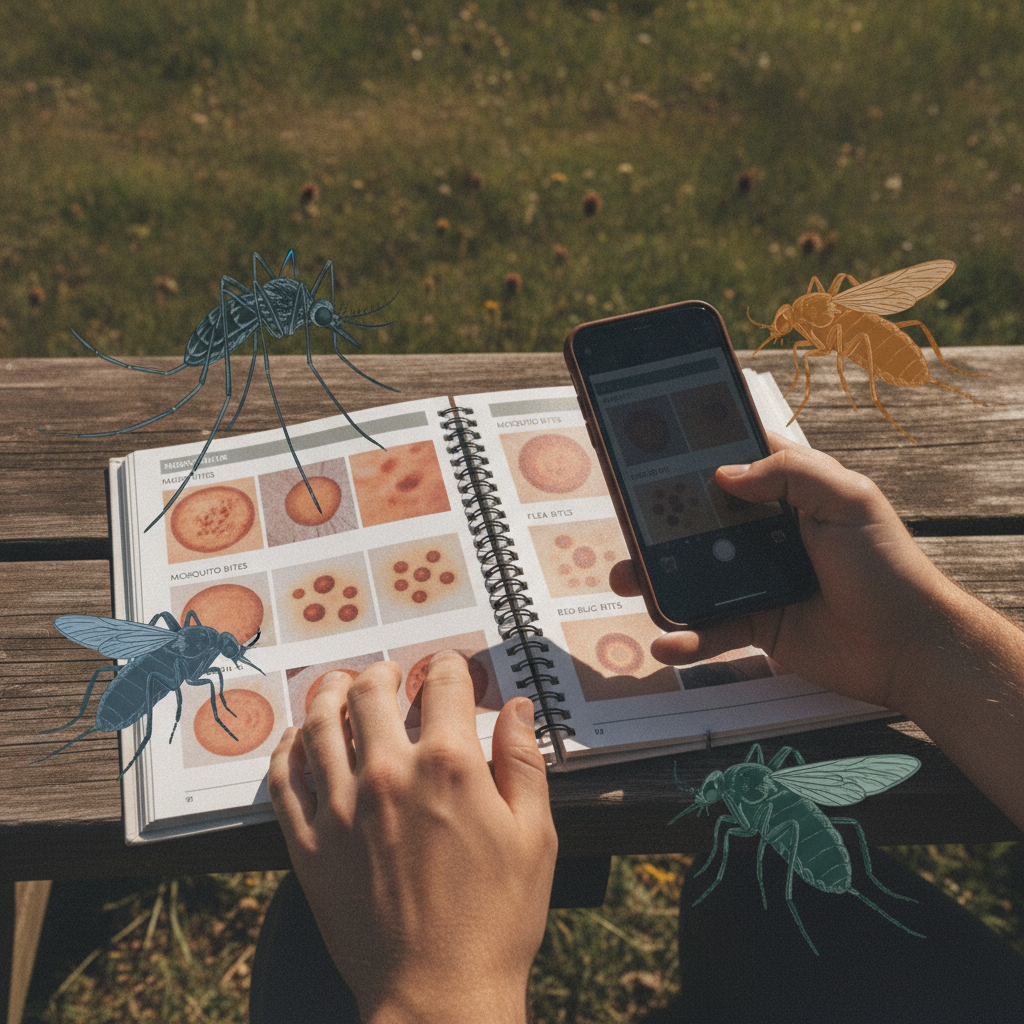
Why Picture-Based Bite Identification Works
When you search for bug bite identification pictures, you are looking for something visual and immediate — a side-by-side comparison that answers the question sitting on your skin. Text descriptions of "small red bumps" apply to dozens of species, but photographs reveal the subtle differences that separate a mosquito welt from a flea bite, a chigger cluster from a bed bug trail. Picture-based identification works because bite morphology follows patterns shaped by mouthpart structure, feeding behavior, and individual immune response.
Entomologists and dermatologists have long relied on photographic atlases to train clinicians and the public. A well-organized reference image set shows not just the bite itself but the context around it — location on the body, grouping pattern, color progression over time, and associated skin changes like blistering or central puncture marks. When you hold your own photo next to a verified reference image, you move from vague worry toward an educated hypothesis about what bit you.
The limitation of pictures alone is real and worth stating upfront. Two people bitten by the same mosquito species can look completely different — one develops a dime-sized welt while another shows barely a pinprick. Age, skin tone, allergy history, and how long ago the bite occurred all change appearance. Picture identification succeeds when you treat reference photos as one data point alongside timing, geography, activity, and whether others around you were also bitten. Used that way, visual comparison becomes one of the fastest paths to a reasonable answer.
Building Your Reference Picture Library
Effective bug bite identification pictures come from trusted sources rather than random social media posts. Medical textbooks, university extension publications, and peer-reviewed dermatology resources provide verified images with species attribution. When assembling your personal reference library, prioritize images that include metadata: the biting species (when known), time since bite, body location, and patient age when relevant.
Organize reference photos by pattern type rather than by species alone. Create mental or digital categories for scattered single bites, clustered groups, linear trails, pustule-forming bites, and solitary painful lesions. Mosquito bites typically fall into the scattered category — round, raised, pale-centered welts on exposed skin. Flea bites cluster tightly, often in groups of three or four around ankles and waistbands. Bed bug bites form lines or zigzags of three to five marks on shoulders, arms, and neck after sleeping.
Spider bite pictures require extra caution because misattribution is epidemic. Most online "spider bite" photos actually show staph infections, herpes, or other skin conditions. True spider bites usually appear as solitary lesions, often with a visible central puncture, at sites where spiders hide — stored clothing, woodpiles, undisturbed corners. When comparing your photo to spider bite references, weigh the single-lesion pattern heavily and treat dramatic necrotic photos with skepticism unless confirmed by a medical professional.
Keep seasonal and regional context in mind when browsing identification pictures. Chigger bite photos show intensely itchy red papules concentrated at sock lines and waistbands after exposure to tall grass in warm months. Tick bite images feature small dark scabs with optional bullseye rashes in Lyme-endemic areas. Fire ant bite pictures display distinctive white pustules atop red bases within hours of contact with mound-dwelling colonies in the southern United States.
Comparing Your Photo to Known Bite Images
Start comparison by matching the macro pattern before examining fine details. Count the lesions — one bite suggests a spider, horsefly, or tick; multiple scattered bites suggest mosquitoes or gnats; tight clusters suggest fleas or chiggers; linear arrangements strongly suggest bed bugs. Next, note body location. Ankle and lower-leg concentrations point toward fleas or chiggers. Torso and back bites after sleeping point toward bed bugs. Exposed arms and neck after outdoor activity suggest flying biters.
Color and texture provide the next comparison layer. Fresh mosquito bites appear pink to red with smooth swelling. Flea bites stay smaller with sharper red halos and less swelling. Bed bug bites may not develop fully for one to three days, appearing as flat red marks that later swell. Fire ant bites progress from red bases to white fluid-filled pustules — a progression visible in sequential reference photos that single snapshots miss.
Scale matters enormously in picture comparison. A bite that looks terrifying in a close-up macro shot may be three millimeters across — flea-sized rather than spider-sized. Include a coin, ruler, or finger for scale in your own photos before comparing to references. Photograph under natural daylight when possible; indoor yellow lighting shifts red tones and makes accurate color matching unreliable.
Document your bite's timeline with multiple photos if identification remains uncertain. Some species produce delayed reactions — bed bug marks may appear days after feeding. Others evolve rapidly — fire ant pustules form within hours. A series of pictures taken at six-hour intervals often resolves ambiguity that a single snapshot cannot.
Common Species in Bite Picture Atlases
Mosquito bite pictures dominate search results because mosquitoes are the world's most common biters. Reference images show round, itchy welts ranging from four to twenty millimeters depending on individual reaction. Look for scattered distribution on exposed skin and association with outdoor activity near dawn, dusk, or standing water.
Flea bite identification pictures emphasize small red dots, typically two to three millimeters, grouped around ankles, calves, and belt lines. Pets are the usual source, so reference sets often include photos of bites appearing after contact with cats, dogs, or infested environments. The bites itch intensely and persist longer than mosquito welts if the flea population remains active.
Bed bug bite pictures showcase the signature breakfast-lunch-dinner pattern — three to five bites in a row or gentle curve on sleep-exposed skin. Reference atlases often pair bite photos with images of the insects themselves, mattress seam harborage, and fecal spotting on bedding. Visual identification of bites alone is less reliable than combining bite photos with environmental evidence.
Chigger bite images show clusters of small red papules at clothing pressure points — sock tops, waistbands, bra lines. Unlike mosquito bites, chiggers do not burrow into skin despite the persistent myth. They attach at skin pores, inject digestive enzymes, and fall off, leaving intensely itchy bumps that peak at forty-eight hours.
Tick bite photos feature embedded mouthparts creating a small dark center, sometimes surrounded by an expanding bullseye rash indicating potential Lyme disease. Reference images distinguish tick bites from mosquito bites by the central scab and longer attachment time — ticks feed for hours to days rather than seconds.
Photography Tips for Better Picture Matching
To create bug bite identification pictures useful for comparison, follow clinical photography principles adapted for home use. Clean the skin gently but avoid applying cream or makeup before photographing — topical products alter color and sheen. Use indirect natural light near a window; direct flash creates hotspots that obscure bite detail.
Frame the shot to show both individual bite morphology and overall pattern. A tight crop of one welt loses cluster context; a full-leg photo from six feet away loses surface texture. Take at least three images: one overview showing all bites, one mid-range showing grouping, and one close-up of a representative lesion.
Hold the phone parallel to the skin rather than at an angle — angling distorts size and shape. Tap to focus on the bite center. Enable grid lines to keep horizons level when photographing limbs. Disable beauty filters and HDR exaggeration that smooth skin and alter redness levels.
Label your photos with date, time, body location, and recent activities. This metadata transforms a simple picture into an identification case file. When you later compare against reference atlases, notes like "appeared after camping near lake" or "only on left ankle after visiting friend's house with cats" narrow species possibilities dramatically.
When Pictures Are Not Enough
Bug bite identification pictures reach their limit when symptoms exceed typical local reactions. Seek medical care rather than continuing photo comparison if you experience difficulty breathing, throat tightness, widespread hives, fever, spreading cellulitis, pus formation, or rapidly expanding painful lesions. These signs indicate allergic reactions or infections that require professional evaluation regardless of what reference photos suggest.
Photographing the biting insect itself — not just the bite — provides far more reliable identification than analyzing skin lesions alone. If you swatted a mosquito, found a tick still attached, captured a bed bug on your sheet, or noticed fleas on your pet, that specimen photo outweighs any bite atlas. Apps like Insect Identifier analyze insect photos directly, connecting the species to its typical bite presentation.
Laboratory confirmation remains the gold standard for serious cases. Skin biopsies, bacterial cultures, and allergy testing resolve cases where visual identification fails. Use picture comparison for the everyday bites that resolve with basic home care, and escalate to medical professionals when pictures and context suggest something beyond routine arthropod exposure.
Frequently Asked Questions
What are the best bug bite identification pictures to trust?
Use images from medical institutions, university extension services, and peer-reviewed dermatology resources. Avoid unverified social media posts where species attribution is often wrong.
Can I identify a bite from one photo alone?
Sometimes, especially when the pattern is distinctive — like bed bug lines or fire ant pustules. Most cases improve with multiple photos, timeline notes, and activity context.
Why do my bites look different from reference pictures?
Individual immune responses vary enormously. The same mosquito species produces small dots in one person and large welts in another. Match pattern and context, not exact size.
Should I photograph bites at different times?
Yes. Progressive photos showing how bites evolve over hours or days help distinguish species with delayed reactions from those that worsen immediately.
What app helps identify the insects behind bites?
Insect Identifier analyzes photos of insects and spiders directly, which is more reliable than bite-mark analysis alone. Download it free on the App Store.
Download Insect Identifier Today
Whether you are comparing bite photos against reference images or ready to photograph the insect itself, Insect Identifier puts expert-level arthropod identification in your pocket. Snap a photo of any bug and receive detailed species information within seconds.
The app covers thousands of species with habitat notes, behavior details, safety information, and identification history you can export as PDF. Save every discovery and build your personal field journal.
Download Insect Identifier on the App Store and start identifying the insects around you today.