
Stings Versus Bites: Why the Distinction Matters
On my guided nature walks, I stop the group whenever someone yelps and starts rubbing a leg. The first question is always the same: did something bite you or sting you? Most people use those words interchangeably, but for identification and first aid, the difference is critical. Biting insects pierce skin with mouthparts designed for blood feeding — mosquitoes, fleas, bed bugs, and ticks. Stinging insects inject venom through a modified ovipositor or specialized stinger as a defense mechanism or prey subdual strategy — bees, wasps, hornets, yellow jackets, and fire ants.
Bug sting identification follows different visual rules than bite identification. Stings typically hurt immediately — sharp, burning, or stabbing pain arriving at the moment of contact. Bites often itch first with delayed pain. Stings produce rapid localized swelling centered on a visible puncture point. Bites develop gradual wheal formation over minutes to hours. Stings from hymenoptera can trigger systemic allergic reactions affecting the entire body within minutes. Most bite reactions remain localized unless secondary infection develops.
Confusing stings with bites leads to wrong treatment. Applying itch cream to a wasp sting misses the ice and elevation that reduce venom spread. Treating a infected flea bite like an allergic emergency wastes emergency room resources. This guide teaches you to identify common stinging arthropods by lesion appearance, pain character, environmental context, and progression timeline — plus the emergency signs that override home identification entirely.
Hymenoptera Stings: Bees and Wasps
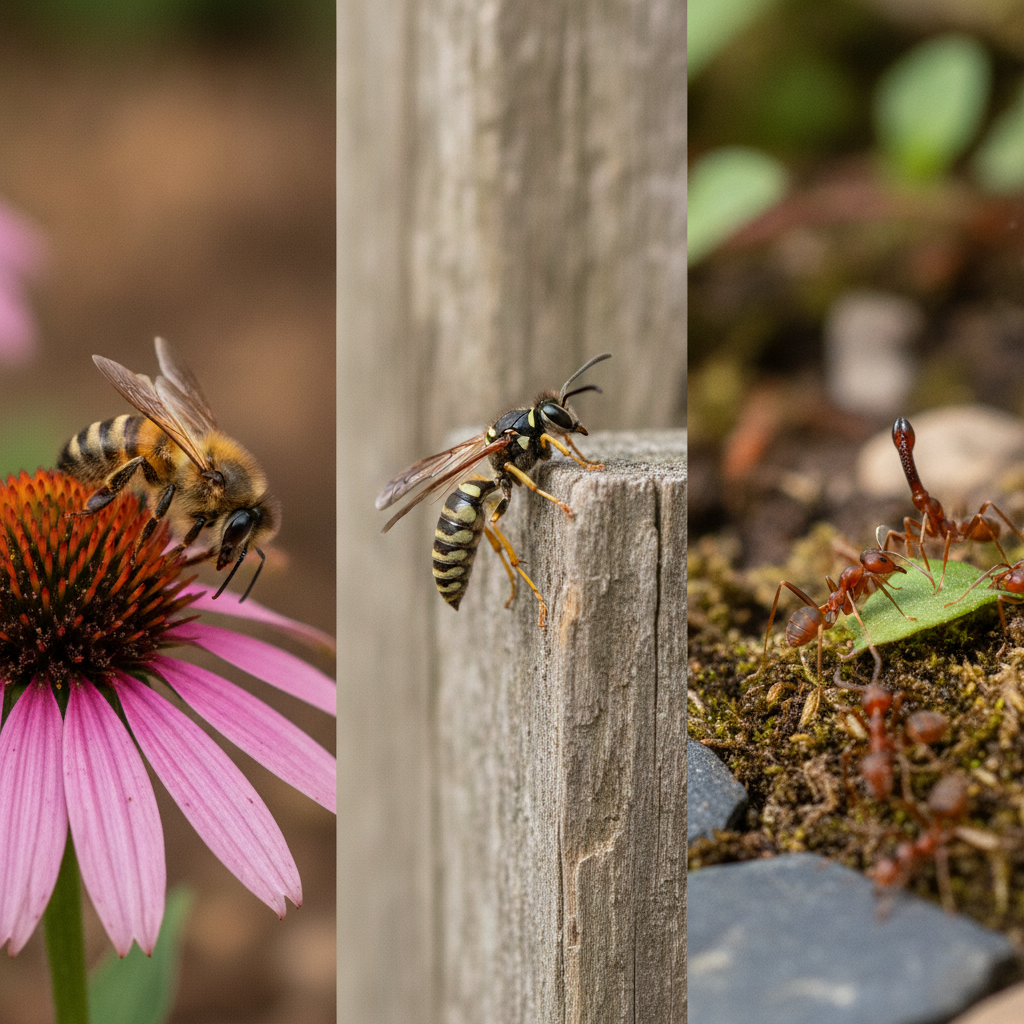
Honey bees (Apis mellifera) sting once and leave their barbed stinger embedded in skin, continuing to pump venom until removed. Bug sting identification for honey bees includes finding the stinger — a dark dot with attached venom sac — at the sting center. Immediate burning pain followed by localized redness and swelling within thirty minutes characterizes the reaction. Allergic individuals may develop systemic symptoms requiring epinephrine.
Wasps, hornets, and yellow jackets (Vespidae family) sting repeatedly without leaving stingers. Sting sites show central puncture without attached apparatus. Yellow jacket stings peak during late summer picnics when colonies are largest and foragers compete for human food and sugary drinks. Identification context includes sting occurring near garbage cans, soda cans, fallen fruit, or eaves nests.
Paper wasp stings occur when disturbed nests on porch ceilings, deck railings, or playground equipment are accidentally contacted. Pain is immediate and sharp. Swelling may spread several inches beyond the puncture site over twenty-four hours without indicating systemic allergy — large local reactions are common and distinct from anaphylaxis.
Carpenter bee stings are rare because males cannot sting and females sting only when handled roughly. Large local swelling from confirmed carpenter bee stings responds to standard first aid. Identification often includes observing the large bee hovering near wooden structures where females excavate nesting galleries.
Fire Ant Sting Identification
Imported fire ants (Solenopsis invicta) dominate bug sting identification conversations in the southern United States because their sting presentation is visually distinctive and medically significant. Fire ants bite with mandibles to anchor themselves, then sting repeatedly in a circle, injecting alkaloid venom that creates burning pain immediately.
Within twelve to twenty-four hours, fire ant stings develop white fluid-filled pustules atop red bases — a progression almost no biting insect produces. Multiple pustules on feet, ankles, or legs after yard work or playground activity in fire ant territory provide strong identification even without observing the ants themselves. Children stepping in mound openings frequently receive dozens of simultaneous stings.
Fire ant sting identification should note whether pustules appear sterile or become secondarily infected from scratching. Infected pustules show increasing redness, warmth, and pain beyond the normal fire ant progression — warranting medical evaluation. Non-infected pustules typically resolve within seven to ten days without scarring if left unbroken.
Native fire ant species across the western United States produce similar but generally less severe reactions. Geographic context combined with pustule progression photography distinguishes fire ant stings from spider bites, folliculitis, and other pustule-forming conditions commonly misidentified in warm-climate states.
Caterpillar and Other Venomous Stings
Not all stinging arthropods belong to Hymenoptera. Certain caterpillar species — puss caterpillars (Megalopyge opercularis), saddlebacks, and io moth larvae — possess urticating hairs or venomous spines causing immediate burning pain often described as worse than bee stings. Bug sting identification for caterpillars includes linear contact patterns where the larva brushed across skin, sometimes with visible spine fragments and immediate radiating pain without the puncture point typical of hymenoptera.
Saddleback caterpillar stings produce immediate intense pain, erythema, and sometimes lymphadenopathy near the contact site. Identification context includes gardening or outdoor activity near host plants — oaks, deciduous trees, and ornamental shrubs where these larvae feed visibly with distinctive appearance if the caterpillar is found and photographed.
Scorpion stings — technically not insects but frequently grouped in public bug sting identification — produce immediate pain, numbness, and tingling. Species severity varies enormously by geography. Arizona bark scorpion envenomation requires medical evaluation; many other North American scorpion stings cause local pain resolving without intervention. Geographic range and scorpion capture provide definitive identification beyond lesion appearance.
Visual Identification of Sting Reactions
Photograph stings using the same systematic approach as bites: overview showing all affected sites, close-up with scale reference, and sequential photos at six, twenty-four, and forty-eight hours capturing progression. Sting progression differs from bite progression — hymenoptera swelling often peaks at twenty-four to forty-eight hours then gradually subsides over three to seven days, while fire ant pustules form within twelve to twenty-four hours specifically.
Central puncture marks identify stings over bites in ambiguous cases. Bee stings may retain visible stingers. Wasp stings show clean puncture points. Mosquito bites rarely show central puncture visible to naked eye in photos. Flea bites show no puncture — only inflammatory papules.
Swelling distribution helps identification. Bee and wasp stings produce dome-shaped swelling centered precisely on the sting site, sometimes spreading widely on face or hand stings without indicating allergy. Angioedema from allergic reaction shows swelling extending beyond the sting zone into adjacent tissue asymmetrically with systemic symptoms.
Color progression matters for fire ant identification. Day zero: red inflamed base with burning pain. Day one to two: white pustule formation atop red base. Day five to seven: pustule dries and crusts. This timeline photographed daily provides identification evidence stronger than any single snapshot.
Allergic Emergencies: When Identification Becomes Secondary
Bug sting identification stops mattering the moment systemic allergic symptoms appear. Call emergency services immediately for difficulty breathing, throat tightness or closing sensation, hoarse voice, widespread hives distant from sting site, dizziness, rapid heartbeat, nausea, or sense of impending doom following any sting. These anaphylaxis symptoms require epinephrine if available and emergency medical care regardless of which species stung.
Large local reactions — swelling exceeding four inches across, lasting over forty-eight hours — are uncomfortable but distinct from anaphylaxis. They confirm hymenoptera envenomation without indicating life-threatening allergy. Medical consultation about venom immunotherapy is appropriate for repeated large local reactions but does not require emergency response.
Delayed allergic reactions to stings are rare but documented. Serum sickness-like symptoms appearing five to fourteen days post-sting — fever, joint pain, rash — warrant medical evaluation separate from immediate sting identification. Document the original sting date and species if known to assist clinical assessment.
First Aid Matched to Sting Identification
Remove honey bee stingers immediately by scraping sideways with a credit card — never pinch and pull, which squeezes remaining venom from the sac. Wash all sting sites with soap and water. Apply cold compress for fifteen-minute intervals to reduce swelling for hymenoptera stings. Elevate stung limbs when possible.
Avoid scratching fire ant pustules, which introduces infection. Clean gently and apply cold compress for initial burning pain. Topical hydrocortisone may reduce inflammation after pustules form. Antihistamines help itching during healing week.
Do not apply folk remedies — toothpaste, baking soda paste, meat tenderizer — that lack evidence and may contaminate broken pustules or sting sites. Identified hymenoptera stings respond to evidence-based simple first aid in the vast majority of non-allergic cases.
Prevention After Sting Identification
Identified yellow jacket exposure leads to covered food and drinks at outdoor meals, sealing garbage containers, and professional nest removal from eaves. Identified fire ant mounds in yards receive targeted bait treatment rather than random yard spraying. Identified bee sting from barefoot stepping on ground forager suggests footwear in clover-rich lawns during bloom.
Wear light-colored clothing without floral patterns in wasp-heavy environments. Avoid scented products attracting foraging hymenoptera. Teach children to recognize fire ant mounds — irregular soil mounds without central opening like ant hills — and walk around rather than through infested areas.
Photograph and identify stinging insects when safely possible using Insect Identifier rather than swatting without documentation. Knowing whether your yard hosts paper wasps, yellow jackets, or solitary bees determines whether professional nest removal or tolerance and coexistence is the appropriate response.
Frequently Asked Questions
How do I tell a sting from a bite?
Stings hurt immediately with sharp or burning pain and often show central puncture. Bites typically itch first with gradual swelling developing over minutes to hours.
What do fire ant stings look like?
Immediate burning pain followed within twelve to twenty-four hours by white pustules on red bases, often multiple marks after disturbing a mound.
Can bug sting identification determine if I am allergic?
Identification confirms venom exposure. Allergy determination requires medical evaluation — skin testing or blood tests — after suspected anaphylaxis or repeated severe reactions.
Should I remove a bee stinger before identifying the sting?
Remove the stinger immediately by scraping — delay continues venom pumping. Photograph the removed stinger separately if documentation is needed.
What app identifies stinging insects from photos?
Insect Identifier uses AI to identify bees, wasps, ants, and other arthropods from photos, helping you understand what stung you. Download it free on the App Store.
Download Insect Identifier Today
Confident bug sting identification starts with knowing the insect that stung you. Insect Identifier puts expert-level arthropod recognition in your pocket — photograph any bee, wasp, ant, or bug and receive detailed species information within seconds.
The app covers thousands of species with habitat notes, behavior details, safety information, and identification history you can export as PDF. Save every discovery and build your personal field journal.
Download Insect Identifier on the App Store and start identifying the insects around you today.