
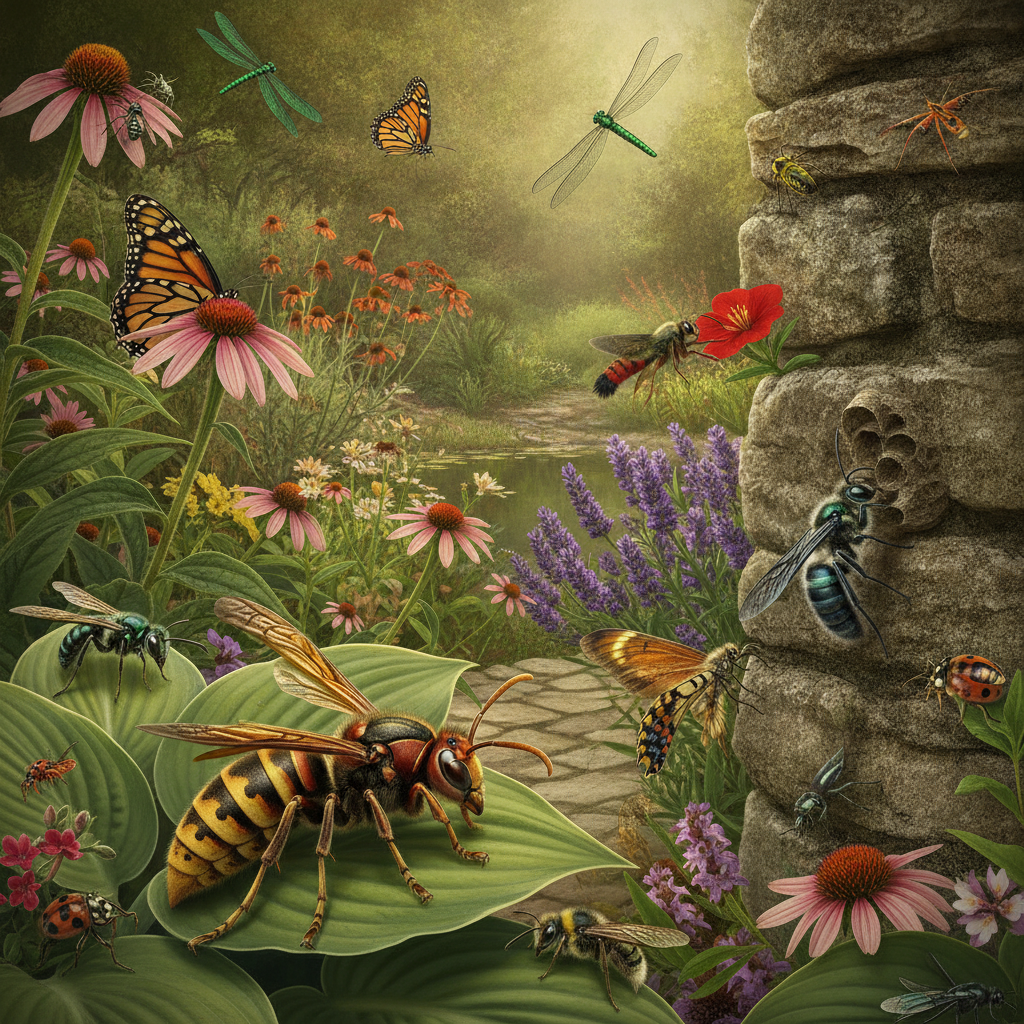
Why Learning Different Wasp Species Matters
The word "wasp" triggers alarm in most people long before anyone asks which species is involved. That reaction is understandable — wasps sting, and some species defend their nests aggressively. But treating every black-and-yellow insect as an identical threat leads to unnecessary fear, misguided pest control, and missed opportunities to appreciate some of the most fascinating insects in your neighborhood. Learning to recognize different wasp species transforms a vague sense of danger into informed observation. You start noticing which visitors are solitary hunters patrolling your garden for caterpillars, which are paper wasps building open combs under your eaves, and which yellowjacket colonies deserve professional attention because they nest underground near high-traffic areas.
I have led hundreds of nature walks where someone points at a flying insect and asks, "Is that a wasp?" My answer is always the same: almost certainly yes, but which wasp matters enormously. North America hosts thousands of wasp species spanning dozens of families. Most never sting humans. Many cannot sting at all. The species that do sting typically reserve that behavior for nest defense, not random aggression. When you can distinguish different wasp species by silhouette, nesting habit, and color pattern, you make better decisions about coexistence, garden management, and when to call a professional.
This guide focuses on the wasp species you are most likely to encounter during ordinary outdoor life — backyard barbecues, garden work, porch sitting, and trail hiking. I organize species by the field marks beginners can actually see without a microscope: body shape, leg color, nest architecture, flight behavior, and seasonal timing. You do not need a degree in entomology to tell a great golden digger wasp from a bald-faced hornet. You need patience, a few reference photos, and the willingness to watch an insect for thirty seconds before reacting.
The Wasp Family Tree in Plain Language
Before diving into individual species, it helps to understand how wasps relate to bees and ants. All three belong to the order Hymenoptera, and the boundaries between them blur more than field guides sometimes suggest. Bees are essentially specialized vegetarian wasps that collect pollen. Many wasps look bee-like because mimicry and shared ancestry produce similar body plans. Ants are closely related ground-dwelling wasps with a social lifestyle. When entomologists say "wasp," they usually mean aculeate wasps — the subgroup with stingers modified from ovipositors — within the superfamilies Vespoidea and Apoidea (excluding the bee lineage).
The wasps most people notice fall into two broad ecological categories: social wasps and solitary wasps. Social wasps — paper wasps, hornets, and yellowjackets — live in colonies with queens, workers, and seasonal cycles. Their nests are architectural landmarks you can often spot before you see the insects. Solitary wasps live alone, provision nests with paralyzed prey, and rarely interact with humans beyond a brief fly-by. Both groups play critical ecological roles as predators and pollinators.
Taxonomically, the social wasps Americans encounter most often belong to the family Vespidae. Paper wasps are primarily genus Polistes. Hornets are genus Vespa (including the introduced European hornet) and Dolichovespula (aerial yellow hornets). Yellowjackets are genus Vespula and Dolichovespula. Solitary wasps span many families: Sphecidae and Crabronidae (thread-waisted hunters), Pompilidae (spider wasps), Scoliidae (scoliid wasps), and Ichneumonidae (parasitoid wasps with long ovipositors that cannot sting humans). The sheer diversity means "wasp" is a starting point, not an identification.
Paper Wasps: The Open-Nest Builders
Paper wasps are among the first different wasp species beginners should learn because they are visible, common, and relatively docile compared to yellowjackets. Look for slender bodies with long dangling legs, especially noticeable during flight. The narrow waist between thorax and abdomen is pronounced. Coloration varies by species and region: northern paper wasps (Polistes fuscatus) show brownish bodies with yellow markings and often display unique facial patterns that researchers use to recognize individuals. Non-native European paper wasps (Polistes dominula) have brighter yellow and black banding and have expanded across much of the United States.
The defining behavioral field mark is nest architecture. Paper wasps build open-comb nests — hexagonal cells exposed like a honeycomb umbrella, usually suspended from a single stalk under eaves, deck railings, playground equipment, or tree branches. You can often identify the species by examining the nest before wasps arrive in spring. Colonies start small when a queen establishes cells in late spring, then grow through summer. By late summer, nests may hold dozens of workers.
Paper wasps hunt caterpillars and other soft-bodied insects to feed larvae. In gardens, they are beneficial predators. They sting when nests are disturbed — mowing beneath a porch nest, children grabbing railings, or pressure-washing eaves. Give paper wasp nests several feet of space when possible. If removal is necessary, treat at dusk when workers have returned and activity drops. Recognizing paper wasps by their dangling legs and open nests prevents confusing them with more aggressive yellowjackets nesting underground nearby.
Hornets and Yellowjackets: Social Wasps That Demand Respect
Hornets and yellowjackets represent the social wasp species most likely to cause painful encounters because they defend enclosed nests vigorously and colonies reach large sizes by late summer. Learning to separate different wasp species within this group improves safety dramatically.
Bald-faced hornets (Dolichovespula maculata) are technically aerial yellowjackets despite the common name "hornet." They are large, black with ivory-white facial markings and white bands on the abdomen. Nests are gray paper spheres the size of a volleyball or larger, typically hung in trees or shrubs. The entrance hole is near the bottom. Bald-faced hornets are aggressive when nests are disturbed — the vibration from lawn equipment ten feet away can trigger defensive swarming. Identify them by nest shape and bold black-and-white coloration before approaching any large gray nest.
The European hornet (Vespa crabro) is the only true hornet established in North America. It is large — up to an inch and a half — with reddish-brown thorax and yellow-and-brown banded abdomen. Unlike most wasps, European hornets fly at dusk and are attracted to lights. They chew bark on trees and shrubs, which alarms homeowners but rarely kills healthy plants. Nests occur in hollow trees, wall voids, and attics. European hornets are less aggressive than yellowjackets at food sources but defend nests strongly.
Yellowjackets (Vespula species) are the wasps that crash picnics. They are compact, fast-flying, and bright yellow and black without the slender waist and dangling legs of paper wasps. Ground-nesting yellowjackets — especially the eastern yellowjacket (Vespula maculifrons) and common yellowjacket (Vespula vulgaris) — build colonies in abandoned rodent burrows, compost heaps, and wall voids. Aerial yellowjackets like the German yellowjacket (Vespula germanica) nest in structures. Late summer is peak conflict season: colonies are enormous, workers scavenge human food, and accidental nest disturbance during yard work causes multiple stings. Identify yellowjackets by their stocky build, rapid flight, and attraction to protein and sugary foods at outdoor meals.
Solitary Wasps: The Overlooked Majority
Most different wasp species are solitary, and most solitary wasps are harmless to humans. Learning a few common types opens a world of ecological intrigue in any garden.
Great golden digger wasps (Sphex ichneus) are large, striking insects with orange legs, black bodies, and golden abdominal bands. They dig burrows in sandy soil and provision them with katydids. Cicada killers (Sphecius speciosus) are even larger — intimidating size sends people running, but males cannot sting and females sting only when handled roughly. They hunt cicadas and nest in bare ground. Mud daubers (Sceliphron and Trypoxylon species) build organ-pipe or cell-like mud nests on walls. They hunt spiders and rarely sting. Spider wasps (Pompilidae) have long legs, often dark bodies with orange or yellow wings, and hunt spiders with precision that rivals any nature documentary.
Parasitoid wasps — especially the ichneumonids with dramatically long ovipositors — look frightening but cannot sting people. The ovipositor drills into wood or caterpillars to lay eggs, not into human skin. When you recognize these as different wasp species from the social stingers, you stop destroying beneficial insects out of misplaced fear.
Telling Wasps Apart from Bees and Flies
Misidentification fuels bad decisions. Hover flies (Syrphidae) mimic wasp coloration but have enormous eyes, short antennae, and only one pair of wings. They cannot sting and are excellent pollinators. Bee flies (Bombyliidae) mimic bees and wasps with fuzzy bodies and hovering flight. Carpenter bees are large and black but have robust, hairy bodies without the wasp waist. Honey bees and bumblebees are hairier than wasps, with bodies built for pollen collection rather than hunting.
When you see a black-and-yellow insect, check these features in order: wing count (flies have one pair), waist definition (wasps have pinched waists), leg length and posture (paper wasps dangle legs), eye size (flies have huge eyes), and behavior (yellowjackets scavenge food aggressively; most bees visit flowers methodically). Photographing the insect and using Insect Identifier accelerates this process when field marks are unclear.
Safe Observation and Coexistence Strategies
Different wasp species warrant different responses. Paper wasp nests under unused eaves may coexist safely if family members know to avoid grabbing that railing. Ground yellowjacket nests in play areas or along fence lines where mowers pass require professional removal. Solitary wasps nesting in garden soil should be left alone — they reduce pest insects and disappear by season's end.
Observation technique matters. Approach nests slowly and never swat at flying wasps — swatting triggers defensive behavior. Wear neutral colors during late-summer picnics; yellowjackets investigate bright floral patterns. Keep sugary drinks covered. Seal garbage cans. If you photograph wasps for identification, use zoom rather than getting close to nests. Teach children the difference between "watch from here" and "too close" before summer outings.
Document the different wasp species you find each season. A simple phone album organized by month reveals patterns: paper wasps appear at porch nests in May, yellowjacket pressure peaks in August, great golden diggers patrol sunny garden patches in July. That personal field guide makes you a more confident naturalist and a safer homeowner.
Frequently Asked Questions
How many different wasp species live in North America?
North America hosts well over four thousand wasp species, though most people encounter fewer than two dozen regularly. Social wasps like paper wasps, hornets, and yellowjackets represent a tiny fraction of total diversity.
Which wasp species are most aggressive toward humans?
Yellowjackets and bald-faced hornets defend enclosed nests most aggressively, especially in late summer when colonies are large. Paper wasps sting when nests are directly disturbed but are generally less defensive at food sources.
Can different wasp species sting more than once?
Unlike honey bees, wasps retain their stingers and can sting multiple times. Social wasps may sting repeatedly when defending nests.
Are all black-and-yellow flying insects wasps?
No. Hover flies, some moths, and bee flies mimic wasp colors. Check wing count, waist shape, eye size, and antenna length to distinguish mimics from true wasps.
What app helps identify different wasp species from photos?
Insect Identifier uses AI to identify wasps, bees, flies, and other insects from photographs, providing species information and safety notes. Download it free on the App Store.
Download Insect Identifier Today
Recognizing different wasp species becomes far easier when you can photograph an insect and receive expert-level identification within seconds. Insect Identifier puts a comprehensive field guide in your pocket — snap a photo of any wasp, bee, or fly and compare AI results against what you observed in the field.
The app covers thousands of species with habitat notes, behavior details, sting risk information, and identification history you can save for future reference. Build your personal wasp catalog one discovery at a time.
Download Insect Identifier on the App Store and start identifying the wasps around you today.