
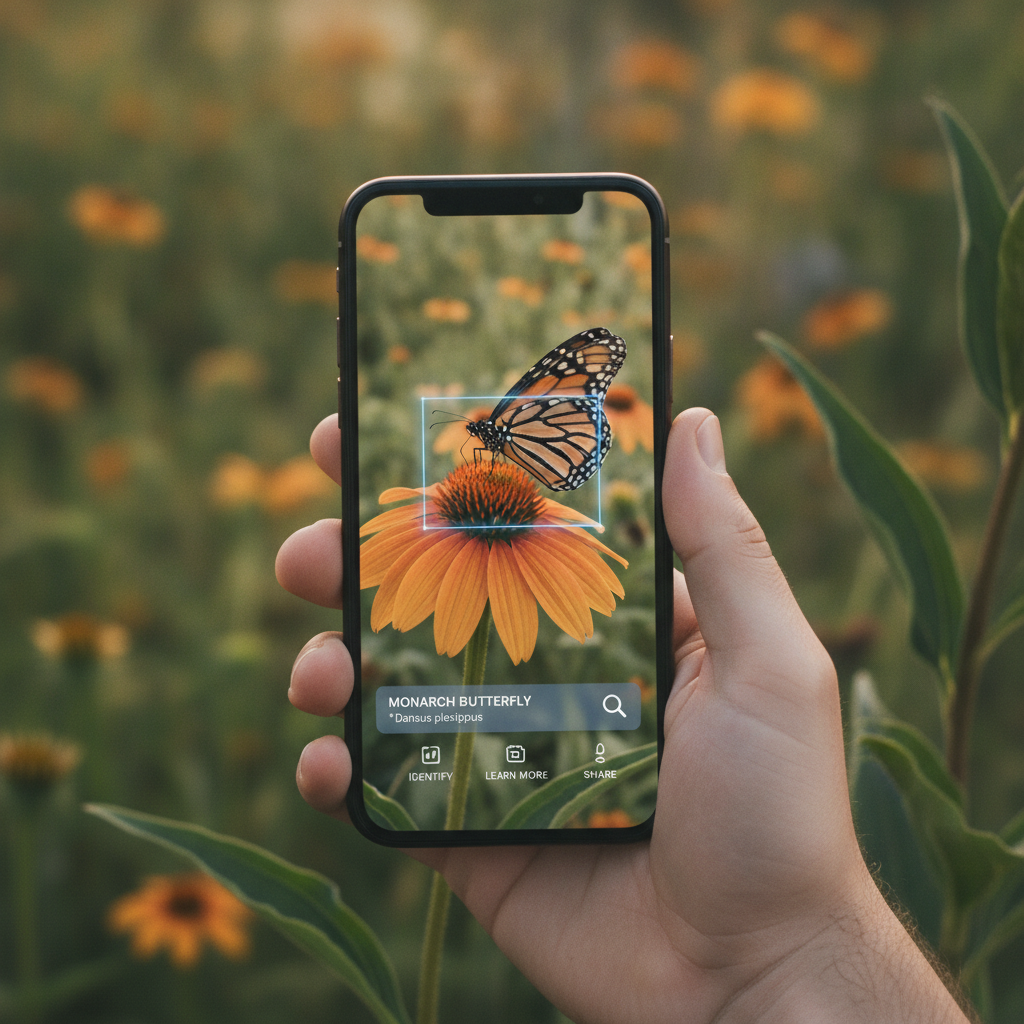
Everyone Can Learn to Identify an Insect From a Photo
Twelve years of leading nature walks taught me that insect identification intimidates people far more than it should. Families arrive expecting to need biology degrees just to tell a beetle from a bug. Within twenty minutes of our first stop, kids are photographing ants and shouting questions about what they found, and parents are surprised to realize they already knew more than they thought. The insects were always there. The missing piece was a simple process for turning what you see into a name you can remember.
This guide is for beginners — families on weekend walks, teachers planning outdoor lessons, apartment dwellers curious about balcony visitors, and anyone who ever wondered "what is that?" while looking at a photograph. You do not need specialized equipment, scientific vocabulary, or the ability to collect and pin specimens. You need a phone camera, patience, and the step-by-step approach I use with every group I lead.
Identifying an insect from a photo works because the photograph lets you slow down. In the field, insects move constantly. They tuck legs, fold wings, and fly away at the worst moment. A good photograph freezes the details that matter and gives you unlimited time to compare against guides, apps, and online resources. Some of my most confident identifications come from photographs taken by eight-year-olds who simply held the phone steady and waited for the bug to pause.
The goal is not perfection. Your first identifications might reach only family level — "some kind of beetle" or "a brush-footed butterfly" — and that is a genuine success. Names build on names. Once you reliably recognize beetles, you start noticing which beetles, and eventually which specific species appear on your morning walks.
What to Notice Before You Photograph
Identification starts before you open your camera app. I teach walk participants to pause and observe first because context answers questions that photographs alone cannot.
Where are you? A forest trail, city park, backyard garden, parking lot planter, and kitchen windowsill each host different insect communities. Note your location in a phone memo or let your camera record GPS automatically. Regional field guides filter by geography, and an identification that makes sense in Georgia may be impossible in Montana.
What is the insect doing? Resting on a leaf, crawling on soil, flying between flowers, swimming on a pond surface, or hiding under bark each suggests different species pools. Behavior is a clue you should write down even if it does not appear in the photograph.
What is it on or near? The plant, rock, log, or structure in the insect's immediate environment provides habitat context. A bright green insect on a rose bush and the same-colored insect on a pine branch are probably different species even if they look similar at casual glance.
How big is it? Compare to something familiar before photographing — smaller than your pinky nail, length of your thumb, or span of your palm. Size is difficult to judge from photographs alone, so note it while the insect is in front of you.
Is it safe to approach? Teach children to photograph from a respectful distance first. Bees, wasps, and some caterpillars with stinging hairs deserve extra space. No identification is worth a sting. Zoom in rather than leaning close when uncertain.
Spend thirty seconds on these observations. They take less time than you expect and improve your identification accuracy more than any single photograph technique.
How to Take Photos That Actually Help Identification
You do not need a fancy camera. Every technique below works with the phone in your pocket right now.
Get down to the insect's level. Kneel, squat, or place your phone on the ground. Photographs shot from standing height looking down at a tiny insect on the trail are almost useless for identification. Eye-level or below shows body shape, leg structure, and wing position clearly.
Fill the frame. The insect should occupy at least one-third of the image. Use your phone's zoom or slowly approach until the bug is large in the frame. If it flies away before you get close, the distant shot still records the encounter — try again with the next insect.
Take multiple shots. I recommend three photographs minimum. One showing the whole insect from above. One from the side showing profile and leg shape. One close-up of the head and antennae if the insect cooperates. Different angles reveal different features, and identification apps perform better with complete visual information.
Keep the background simple. A beetle on a plain rock photographs better than the same beetle on busy leaf litter where the camera struggles to separate subject from background. If possible, wait for the insect to cross a trail, sidewalk, or bare patch.
Use natural light. Open shade on a sunny day produces the best results. Avoid harsh midday sun directly overhead, which creates dark shadows under the insect's body. Avoid flash when possible — it washes out colors and creates unnatural reflections on shiny beetle surfaces.
Hold steady. Brace your elbows on your knees or rest your phone on a solid surface. Sharp focus matters more than perfect composition. Tap your screen to focus on the insect before pressing the shutter.
Add something for size. Place your finger near — not on — the insect, or include a coin, pencil, or leaf of known size in one frame. This simple step prevents the common error of misidentifying a tiny flea beetle as a much larger species.
Practice these techniques on common, slow-moving insects first. Ants, lady beetles, and grasshoppers forgive beginner mistakes and let you build skills before attempting quick fliers like dragonflies and butterflies.
A Simple Five-Step Identification Process
When you sit down after your walk to identify an insect from a photo, follow these five steps in order. I print this list on cards for school groups because the sequence prevents the random guessing that wastes time.
Step one: count the legs. Insects have six legs. Spiders have eight. Centipedes have many more. This ten-second check separates insects from other arthropods and confirms you are identifying an insect rather than an arachnid.
Step two: look at the wings. Does it have wings? One pair suggests a fly. Two pairs of large membranous wings suggest a bee, wasp, or dragonfly. Two pairs where the front wings look hard or shell-like suggest a beetle. Wings held flat over the body like a tent suggest a true bug. No visible wings might mean a young nymph, a wingless species, or wings folded tightly — note this and continue.
Step three: notice colors and patterns. Bold stripes, spots, and patches help narrow possibilities. Write down what you see: "black and yellow stripes on abdomen," "orange wings with black borders," "metallic green body." Colors alone rarely confirm species, but they point your search in useful directions.
Step four: check your context notes. Match your location, date, habitat, and behavior observations against candidate species. If an app suggests a tropical butterfly but you photographed in Minnesota in March, skepticism is appropriate. Regional and seasonal plausibility filters wrong suggestions quickly.
Step five: verify with two sources. Run your photograph through Insect Identifier or a similar app. Then check the suggestion against a field guide, university extension website, or iNaturalist observation from your area. Two agreeing sources mean confident identification. One source means "probably" — still worth recording. Conflicting sources mean your photo needs a better angle or the insect belongs to a genuinely tricky group.
Write down your final identification with the date and location, even if tentative. Your personal nature journal grows more valuable every time you add an entry.
Fun Insects to Start With on Family Walks
Some insects make better beginner identification subjects than others. I structure early walks around these reliable, distinctive species that reward novice photographers with successful identifications.
Lady beetles are slow, colorful, and common everywhere. Red with black spots is the classic pattern, but orange species and species with different spot counts exist. Photograph the area behind the head — the pronotum — where distinctive marks separate similar species.
Monarch butterflies are large, slow in cool weather, and unmistakable when you capture the orange and black wing pattern. If you find caterpillars on milkweed plants, photograph both the caterpillar and the plant together for near-certain identification.
Praying mantises have an unmistakable shape that needs no wing analysis. Children recognize them immediately. Note the thin versus thick body profile and whether wings extend past the abdomen for species-level detail if you want to go deeper.
Grasshoppers sit on trails and grasses long enough for multiple photographs. Large hind legs built for jumping and short antennae distinguish them from similar katydids and crickets, which have long antennae.
Dragonflies are challenging but spectacular. Start with the large species that perch on pond vegetation. Photograph the wing pattern and body color while perched. Chasing flying dragonflies frustrates beginners — wait for one that lands.
Bumble bees are furry, loud, and flower-associated. Multiple species exist, but identifying "a bumble bee" with confidence is a legitimate beginner success. Photograph on flowers for context.
Fireflies glowing at dusk need no photograph for family-level identification, but daytime photographs of the beetle form surprise people who never connected the light show to a physical insect.
Build your walk route around habitats supporting these species — gardens, meadows, pond edges, and deciduous forest trails. Success breeds enthusiasm, and enthusiastic kids become the family's best insect spotters within a few outings.
When Your Photo Is Not Enough
Beginners should know that some insects cannot be identified from photographs alone, and that is normal rather than failure.
Tiny insects below a few millimeters may exceed your phone camera's ability to capture diagnostic detail even with macro mode. Mites, springtails, and many parasitic wasps fall into this category. Family-level identification — "a mite" — is the honest answer.
Worn and faded specimens lose the color patterns that distinguish similar species. Late-season butterflies with tattered wings and faded beetles may not match reference images showing pristine individuals. Note the uncertainty in your journal.
Active fliers photographed mid-air usually produce blurry images unsuitable for species identification. Wait for landing, or identify to group level — "some kind of fly" — and try again next time.
Lookalike species genuinely require features your photograph does not show. Expert identifiers sometimes need to examine leg spine arrangements, mouthpart details, or genitalia under magnification for definitive species separation. Accepting genus or family level is appropriate when your photo lacks critical detail.
Unknown is a valid answer. I tell every group: "I don't know, let's find out together" is the most honest and useful response an educator can give. Unknown specimens become learning opportunities — better photographs next time, questions to extension services, or observations submitted to iNaturalist where experts volunteer identifications.
Curiosity matters more than perfection. A walk that produces three confident identifications and seven mysteries is a successful walk that gives you reasons to return.
Building a Family Nature Journal From Photos
The long-term reward of learning to identify an insect from a photo is the journal you build together. Families on my programs who maintain photo journals through a full year routinely identify over a hundred species without ever feeling like they studied.
Create a shared album on your phone or cloud storage. One folder per month, or one folder per family member — whatever motivates participation. Date, location, and identification caption on every image.
Review monthly. Sit down together and scroll through the month's insects. Children remember encounters vividly and correct parent misidentifications enthusiastically. Monthly review reinforces learning and reveals seasonal patterns — first firefly in June, first monarch caterpillar in July.
Celebrate milestones. First butterfly identified. Tenth beetle species. First insect never seen before. Small celebrations keep kids engaged through the stretches between exciting discoveries.
Share with community. Upload confirmed identifications to iNaturalist with children as observers. They enjoy seeing their photographs contribute to science, and community feedback catches errors while teaching new diagnostic features.
Revisit locations seasonally. The same trail produces different insects in spring, summer, and fall. Seasonal comparison teaches phenology — the timing of natural events — more effectively than any classroom lesson.
Connect to broader nature observation. Insects lead to flowers they pollinate, birds that eat them, and weather patterns that influence their emergence. Photo identification becomes a gateway to ecological thinking that deepens every subsequent nature walk.
Frequently Asked Questions
How do beginners identify an insect from a photo?
Observe context first, take three photographs from different angles, follow the five-step process counting legs and examining wings, then verify with an identification app and a second reference source.
What is the easiest insect to identify from a photo for kids?
Lady beetles, praying mantises, and monarch butterflies on milkweed offer the most beginner-friendly identification success. They are slow, distinctive, and common in most North American neighborhoods.
Can you identify an insect from a photo without killing it?
Absolutely. Photography-based identification requires no specimen collection. Ethical nature observation preserves the insect while still enabling accurate identification from clear photographs.
Why does my app give different answers for the same insect photo?
AI identification suggests probable matches based on visible features. Low-confidence results, poor photograph quality, or genuinely similar species produce varying suggestions. Cross-reference with field guides and context notes.
What app helps families identify an insect from a photo?
Insect Identifier provides instant AI-powered identification with species profiles, safety notes, and habitat information designed for field use. Download it free on the App Store before your next nature walk.
Download Insect Identifier Today
Identifying an insect from a photo is easier when the whole family shares one powerful tool. Insect Identifier turns any smartphone into a field guide — snap a photo and receive detailed species information within seconds.
The app covers thousands of insects with beginner-friendly descriptions, safety information, and a saved identification history that builds your family nature journal automatically. Make every walk an discovery adventure.
Download Insect Identifier on the App Store and start identifying the insects around you today.