
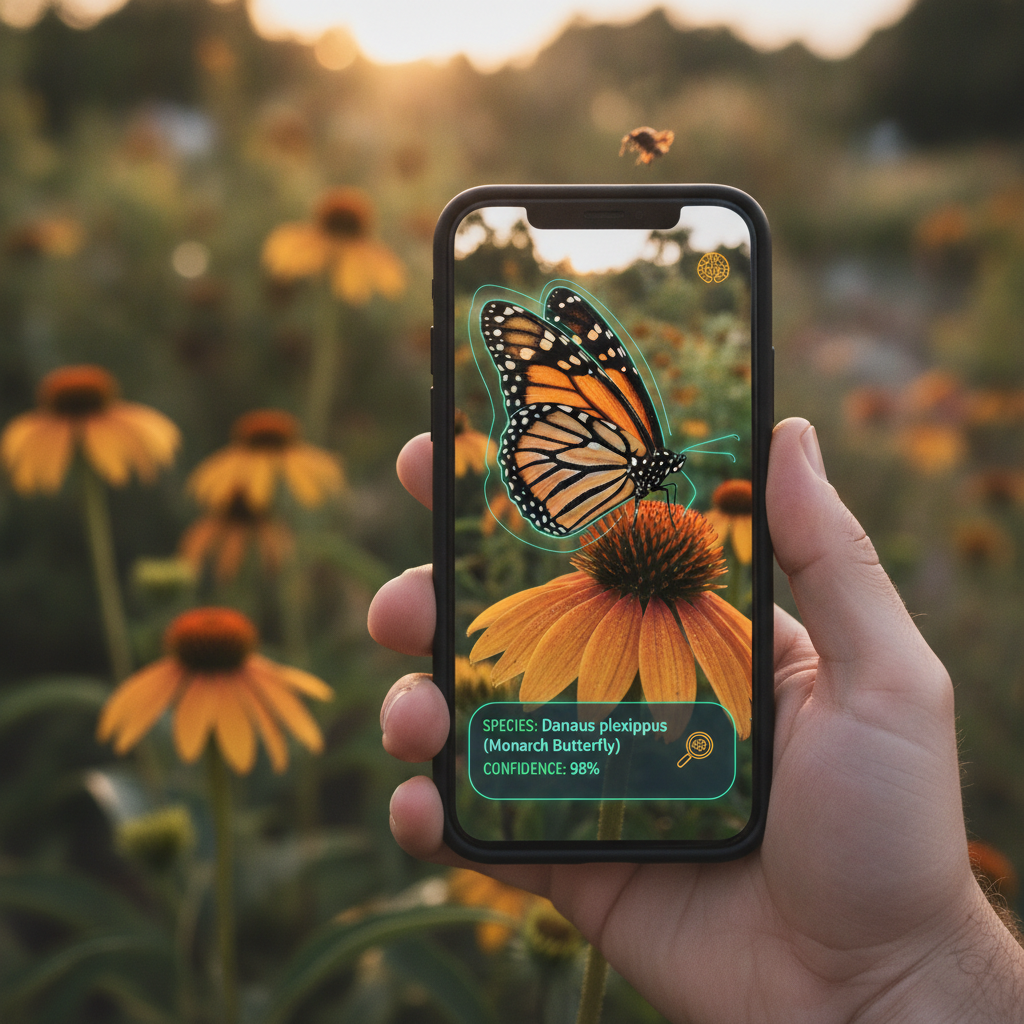
The Art of Identifying Bugs From Photographs
Teaching university students to identify bugs from photos revealed something surprising: the skill is less about memorizing species names and more about learning to see pattern relationships across life stages and taxonomic groups. A student who masters wing venation on butterflies can transfer that observational precision to dragonfly wings, grasshopper tegmina, and true bug hemelytra within a single semester. The photograph becomes a teaching tool that rewards careful looking in ways live specimens sometimes frustrate — the image stays still, allows zooming, and invites comparison with reference materials at your own pace.
Identifying bugs from photos also addresses a practical reality of modern natural history. Many people encounter insects they want to identify without collecting specimens, whether from ethical objections to killing, legal restrictions in parks and preserves, or simply because the insect flew away before capture was possible. Photography preserves the encounter and enables identification afterward, bridging the gap between observation and taxonomy.
This guide draws on my research in butterfly and moth diversity to teach photo identification principles that extend across all insect orders. While I will emphasize lepidopteran examples where wing patterns and caterpillar morphology illustrate concepts most vividly, every technique here applies to beetles, true bugs, flies, and the other arthropods you photograph daily.
The central challenge in photo identification is similar species pairs — insects that share enough visual features to confuse beginners but differ in diagnostic details that photographs can capture when you know what to look for. Learning to identify bugs from photos means learning which details matter for which groups, and accepting that some photographs simply do not contain enough information for confident species-level answers.
Life Stage Awareness in Photo Identification
The most consequential error in bug photo identification is matching your photograph against reference images of a different life stage. Insects undergo metamorphosis, and larval forms frequently bear zero resemblance to adults of the same species.
Complete metamorphosis in butterflies, moths, flies, beetles, and wasps produces egg, larva, pupa, and adult stages that look entirely unrelated. A hairy caterpillar photograph searched against adult butterfly images will never yield a match. Before opening any reference guide, determine which life stage your photograph documents. Segmented wormlike bodies with multiple pairs of legs indicate larvae. Pupal cases range from exposed chrysalids hanging from branches to buried pupae never visible in casual photography. Adult insects show wings, compound eyes, and fully developed legs.
Incomplete metamorphosis in true bugs, grasshoppers, dragonflies, and mantises produces nymphs that resemble small adults without functional wings. Nymph photographs can be identified using adult reference images if you account for missing or developing wing pads. A fifth-instar true bug nymph shows wing buds that help identification; a first-instar nymph may lack features present in adult references entirely.
Practical application: When you photograph a caterpillar, search caterpillar identification resources, not butterfly field guides. When you photograph a grub, search beetle larva references. When you photograph a nymph, look for nymph-specific images in true bug and grasshopper guides. This single habit eliminates the majority of failed identification attempts I see in student submissions.
Record life stage in your photo notes alongside date and location. A chrysalis photographed in early spring constrains species possibilities differently than the same-looking chrysalis in autumn. Seasonal timing interacts with life stage to narrow identification windows substantially.
Wing Patterns and Venation as Identification Keys
Wing patterns provide the richest identification data for many insect groups, and photographs that capture wing detail clearly support remarkably precise identifications.
Butterfly upperwing patterns display diagnostic color patches, eyespots, wing margins, and vein markings that separate species within genera. Monarch butterflies show black veins on orange wings with white-spotted black borders. Viceroy butterflies mimic monarchs but add a black line crossing the hindwing vein pattern. Photographs capturing upperwing pattern from directly above support confident separation of these lookalikes.
Butterfly underwing patterns often differ dramatically from upperwings and provide identification data when butterflies rest with wings closed — the posture they maintain most of the day. Question mark butterflies show a silver question mark on the hindwing underside. Eastern comma butterflies show a silver comma shape. Upperwings of both species look nearly identical orange and black. Underwing photographs identify what dorsal views cannot.
Moth wing patterns vary from bold tiger moth stripes to subtle geometer moth lines that camouflage against bark. Forewing and hindwing patterns may differ. Photograph moths from above with wings spread if the specimen permits, or from the side capturing the resting posture that displays relevant pattern elements. Many moths rest with wings folded roof-like over the body, displaying forewing patterns along the dorsal surface.
Wing venation — the pattern of veins supporting wing membranes — provides identification data when color patterns are subtle or worn. Dragonfly wing venation is extensively used in species keys. Grasshopper wing venation visible in spread specimens separates similar species. True bug wing venation where the leathery corium meets the membranous apex provides diagnostic characters for difficult genera.
Photography for wing detail: Approach from directly above for spread-wing specimens. For closed-wing resting butterflies, position your camera to capture the visible wing surface without casting shadow across pattern elements. Avoid flash that bleaches subtle color differences between similar species. Morning photographs of dew-covered wings are beautiful but obscure pattern detail — wait for dryness or gently encourage wing opening by warming cold specimens.
Larval Morphology: Caterpillars and Beyond
Caterpillar identification from photographs is one of my specialty areas, and the principles extend to all insect larvae. Larval morphology provides identification data that many enthusiasts overlook entirely.
Caterpillar body features include hair density and color, horn presence and shape, lateral stripe patterns, proleg configuration, and head capsule color. Hornworms show a characteristic posterior horn — tomato hornworms have black horns, tobacco hornworms have red horns. Swallowtail caterpillars display eyespot markings and osmeterium organs that extend when disturbed. Tussock moth caterpillars show distinctive hair tufts in specific positions.
Caterpillar host plant is essential context that must accompany larval photographs. Many caterpillars feed on only one plant family or even a single species. A green caterpillar on milkweed is almost certainly a monarch. The same appearance on parsley suggests black swallowtail. The same appearance on an oak leaf suggests one of dozens of oak-feeding species requiring additional morphological detail. Always photograph the caterpillar on its food plant.
Non-lepidopteran larvae follow parallel principles. Beetle grubs show head capsule hardness, leg presence or absence, and body segmentation patterns. True bug nymphs show developing wing pads increasing in size through instars. Fly maggots lack visible legs and show simple tapered bodies — identification often requires rearing to adult emergence. Sawfly larvae resemble caterpillars but show more than five pairs of prolegs, a diagnostic difference visible in careful close-up photographs.
Size progression through instars complicates larval photo identification. A first-instar caterpillar may lack color patterns fully developed in later instars. Photograph the largest larvae in a population for the most complete morphological data. Note approximate size relative to a finger or leaf for scale.
Similar Species Pairs and How to Separate Them
Photo identification expertise develops largely through mastering similar species pairs — learning the one or two diagnostic features that separate lookalikes your region commonly produces.
Monarch versus viceroy butterflies: Both orange and black. Viceroy shows a transverse black line across hindwing veins visible in dorsal photographs. Viceroy is also smaller on average, but size alone is unreliable. The wing vein line is the photograph feature to capture.
Cabbage white versus clouded sulphur butterflies: Both pale yellow or white. Cabbage whites show single dark wing spots on dorsal forewings in females, two in males. Clouded sulphurs show wider dark wing borders and different underside patterns. Photograph both wing surfaces when possible.
Lady beetle lookalikes: Convergent lady beetles, Asian lady beetles, and spotted cucumber beetles all show orange or yellow with black spots. Asian lady beetles show an M-shaped mark on the pronotum behind the head. Cucumber beetles are more elongated with different antennae. Photograph the pronotum pattern from above.
Stink bug versus leaf-footed bug: Both shield-shaped true bugs. Leaf-footed bugs show flattened hind leg segments resembling leaves. Stink bugs lack this leg modification. Lateral photographs showing leg structure separate these groups immediately.
Paper wasp versus yellowjacket: Slender versus stocky body shape visible in lateral photographs. Nest structure — open cells versus enclosed envelope — provides habitat confirmation when nests are photographable.
Build a personal cheat sheet of similar species pairs common in your region. Each successful separation teaches pattern recognition that accelerates future identifications. I encourage students to maintain a digital folder organized by these pairs rather than alphabetically by species name.
Building Confidence Through Systematic Practice
Identifying bugs from photos is a skill that compounds with deliberate practice. Random occasional identification attempts produce slow improvement. Structured practice builds expertise efficiently.
Weekly photo challenges work well for my students and translate to any motivated learner. Photograph one unidentified insect per week, work through the full identification workflow, and record your result with confidence level. Revisit uncertain identifications when you learn new diagnostic features. Over a year, this produces fifty-plus identified species and a growing personal reference library.
Cross-validation strengthens every identification. Submit the same photograph to an AI identification app, a regional field guide key, and a citizen science platform like iNaturalist. Agreement across three independent sources warrants high confidence. Two-of-three agreement suggests probable identification with minor uncertainty. Complete disagreement means your photograph needs improvement or the specimen belongs to a genuinely difficult group.
Seasonal focus aligns identification practice with natural availability. Spring emphasizes early-emerging moths and overwintered butterfly adults. Summer brings peak caterpillar diversity. Autumn produces incredible moth diversity at lights. Winter shifts to indoor insects and evergreen habitat species. Seasonal focus prevents the frustration of searching for summer species in winter photographs.
Mentorship accelerates learning. Join local naturalist groups, attend butterfly counts, participate in moth nights at nature centers. Experienced identifiers who review your photographs provide feedback that no guidebook replicates. They point out features you overlooked and correct misidentifications before bad patterns become ingrained habits.
Contribute to science. Verified photo identifications uploaded to citizen science platforms contribute to range mapping, phenology studies, and conservation monitoring. Your hobby identifications become research data when documented with accurate metadata and confirmed by the community review process.
Frequently Asked Questions
How do I identify a bug from a photo if I know nothing about insects?
Start by determining the life stage and general body shape, then use an AI identification app for preliminary suggestions. Cross-reference results with a regional field guide and note habitat, host plant, and season to verify plausibility.
Why do my bug photo identifications keep coming back wrong?
The most common causes are matching against the wrong life stage, insufficient photograph detail, and relying on color alone without checking diagnostic features like wing patterns, pronotum marks, or leg structure.
Can caterpillars be identified from photos alone?
Many caterpillars reach species or genus level from photographs when host plant, size, and morphological details like horns, hair tufts, and stripe patterns are clearly visible. Some species require rearing to adult for definitive confirmation.
What photograph angle is best to identify bugs from photos?
Capture dorsal and lateral views plus close-ups of the head and any distinctive features like wing patterns or leg modifications. Include scale reference and habitat context in your notes or additional frames.
Which app helps identify bugs from photos most accurately?
Insect Identifier uses AI trained on verified specimens across all life stages and provides species profiles with habitat and safety information. Download it free on the App Store for field identification support.
Download Insect Identifier Today
Learning to identify bugs from photos becomes dramatically easier with intelligent assistance at every step. Insect Identifier analyzes your photographs using AI trained on verified specimens and returns detailed species information within seconds.
The app covers butterflies, moths, beetles, true bugs, and thousands more with life stage notes, habitat details, and identification history you can build into a personal reference collection. Turn every photograph into a learning opportunity.
Download Insect Identifier on the App Store and start identifying the insects around you today.