
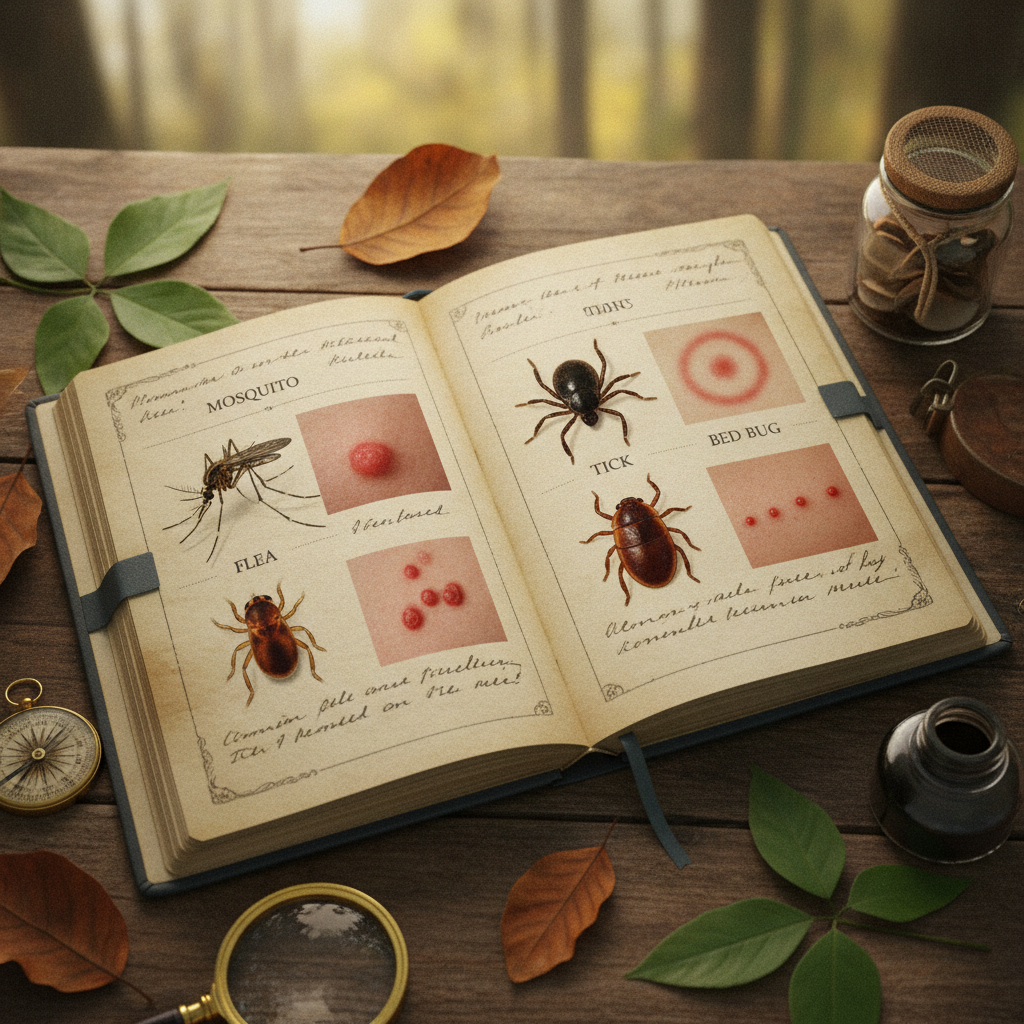
Why Comparing Bug Bites Side by Side Works
The most common question in my entomology outreach is deceptively simple: how do I identify different bug bites when they all look like red bumps? The answer is comparison. Individual bites photographed in isolation resist identification because histamine-driven inflammation produces a narrow visual range across dozens of species. But different bug bites reveal their identity through comparative features — how they differ from each other in pattern, location, timing, and progression rather than any single absolute appearance.
Learning to identify different bug bites means building a mental comparison chart. Mosquito bites scatter; flea bites cluster on ankles. Bed bug bites line up in rows; chigger bites concentrate at clothing barriers. Fire ant stings become pustules; spider bites stay solitary. Tick bites retain central scabs; horsefly bites bleed and bruise. None of these rules works in isolation every time, but together they create a comparative framework that resolves most household and outdoor scenarios.
This guide presents side-by-side comparison across the biting and stinging arthropods you are most likely to encounter in North America. Each section contrasts two or three commonly confused bite types with distinguishing features, typical contexts, and confirmation strategies beyond skin appearance alone.
Mosquito Bites Versus Flea Bites
These two confuse more people than any other bite pair because both produce small itchy red marks on legs. Comparison separates them reliably when you know what to weigh.
Mosquito bites appear as scattered round welts ranging from five to fifteen millimeters with pale centers and pink-to-red halos. They occur anywhere exposed during outdoor activity — arms, neck, face, legs if wearing shorts. Multiple family members develop similar scattered patterns after shared outdoor time. Bites itch within minutes of feeding and swell over thirty to sixty minutes.
Flea bites present as smaller dots — typically two to four millimeters — with sharper red color and less swelling. They cluster tightly rather than scatter, usually on ankles, calves, and waistbands where pet-associated fleas access skin. One or two household members may be affected preferentially depending on pet sleeping habits. Flea bites itch intensely and persist for days or weeks if the flea population remains untreated.
Comparison shortcut: scattered large welts after outdoor evening activity equals mosquitoes. Tight ankle clusters after visiting homes with pets equals fleas. When both seem possible — camping trip with untreated campground cats — check pets and environment. Mosquitoes need no pet involvement; fleas almost always connect to mammal hosts in the environment.
Bed Bug Bites Versus Mosquito Bites
Bed bug and mosquito confusion arises because both can produce itchy welts of similar individual size. Comparison focuses on arrangement and timing rather than single-lesion appearance.
Bed bug bites arrange in lines, clusters, or gentle zigzags of three to five marks on sleep-exposed skin — shoulders, upper arms, neck, face. They frequently appear after sleeping in affected beds, including hotels, and may develop one to three days after feeding due to delayed hypersensitivity in some individuals. Roommates in the same bed may show completely different reactions — one covered in welts, one unmarked.
Mosquito bites scatter randomly without linear arrangement on any exposed skin after outdoor activity. They develop within minutes to hours of feeding, not days later. Household members sharing outdoor exposure show similar scattered patterns rather than one affected and one unaffected sleeping partner.
Comparison shortcut: linear clusters on shoulders after overnight sleep equals bed bugs. Scattered marks after dusk outdoor activity equals mosquitoes. Hotel travel history strongly supports bed bugs when pattern fits. Standing water and woodland exposure support mosquitoes.
Chigger Bites Versus Flea Bites
Both produce intense ankle and leg itching in clustered small papules, making chigger versus flea comparison a common summer diagnostic challenge.
Chigger bites concentrate at clothing barrier sites — sock tops, waistbands, bra lines, belt edges — after exposure to tall grass, brush, or meadow edges during warm months. Clusters may contain twenty or more papules in a concentrated zone. No pet involvement is required. Itch intensity peaks at forty-eight hours post-exposure and gradually resolves over one to two weeks without environmental treatment because chiggers do not infest homes.
Flea bites cluster on ankles and lower legs but lack the strict clothing-line distribution chiggers show. Pet exposure or infested environment contact precedes appearance. Bites persist and recur nightly until flea populations are eliminated from pets and home. Flea dirt on pet fur or carpet confirms the comparison diagnosis.
Comparison shortcut: dense clusters exactly at sock and waist lines after hiking equals chiggers. Ankle clusters with pet scratching and recurring nightly bites equals fleas. Permethrin-treated clothing prevents chiggers; veterinary flea treatment prevents fleas.
Tick Bites Versus Spider Bites
Both typically present as solitary lesions, generating enormous spider bite over-diagnosis when ticks are the actual cause, or missed tick-borne disease when spider attribution delays proper monitoring.
Tick bites show small dark central scabs where mouthparts embedded during extended feeding — hours to days. Location correlates with outdoor activity in woodland, tall grass, or brush. Watch for expanding bullseye erythema migrans over days to weeks indicating potential Lyme disease. Tick bites are usually painless at attachment time — many people never felt the bite occur.
Spider bites — when confirmed — produce solitary inflammatory lesions, sometimes painful, sometimes itchy, at sites of accidental spider contact. Visible central puncture from chelicerae may appear. True spider bites are statistically rare compared to tick attachments and bacterial skin infections mislabeled as spider bites. Geographic plausibility matters — recluse and widow envenomations occur in specific regional ranges.
Comparison shortcut: solitary lesion after hiking with possible unnoticed attachment equals tick — inspect for embedded tick or removal scab. Solitary painful lesion with observed spider contact equals possible spider bite. Solitary lesion worsening over five days with pus equals likely infection, not either arthropod.
Fire Ant Stings Versus Other Lesions
Fire ant stings produce the most visually distinctive progression among common arthropod exposures, making comparison straightforward when you photograph daily.
Fire ant stings cause immediate burning pain followed within twelve to twenty-four hours by white pustules on erythematous bases. Multiple pustules appear after disturbing mounds in southern US yards and playgrounds. No other common household arthropod produces this exact pustule timeline. Scratching pustules introduces secondary infection — comparison with folliculitis and impetigo matters when pustules appear infected rather than sterile.
Bee and wasp stings cause immediate sharp pain with rapid swelling but do not form white pustules. Spider bites rarely pustulate in early stages. Bacterial folliculitis develops pustules but lacks the simultaneous multi-site appearance after yard exposure that fire ant stings show.
Comparison shortcut: multiple white pustules on red bases twelve to twenty-four hours after southern yard activity equals fire ants. Immediate swelling with central puncture after outdoor food area equals wasps or yellow jackets.
Building Your Personal Comparison Chart
Create a simple comparison reference saved on your phone for quick consultation during bite events. Organize by the question you can answer fastest: how many marks? One — tick, spider, wasp. Many scattered — mosquito, gnat. Many clustered — flea, chigger, fire ant. Linear — bed bug.
Add location column: ankles — flea or chigger. Sleep-exposed skin — bed bug. Outdoor exposed — mosquito or fly. Add timing column: immediate after outdoor dusk — mosquito. Delayed one to three days after sleep — bed bug. Peak itch at forty-eight hours after hiking — chigger.
Update your chart seasonally with regional notes. Black fly season in northern states adds painful scalp and shoulder bleeding bites distinct from mosquito comparison profiles. No-see-um season adds dozens of tiny welts smaller than standard mosquito marks. Local extension service websites provide regional comparison supplements free.
When Comparison Is Not Enough
Identify different bug bites comparison fails when multiple species feed simultaneously — mosquitoes and chiggers after a meadow picnic, fleas and bed bugs in a neglected rental property. In these cases, specimen identification of captured arthropods resolves mixed presentations that skin comparison alone cannot separate.
Comparison also fails for atypical individual reactions. Some people develop massive welts from mosquito bites resembling spider bite photos online. Others show no visible reaction to bed bug feeding despite confirmed infestation. When comparison suggests one species but environmental evidence suggests another, trust the insects and harborage signs over bite appearance alone.
Medical evaluation supersedes home comparison for systemic symptoms, infection signs, and tick bites with expanding rashes. Comparison guides prevention and reduces anxiety for routine exposures — it does not replace professional care for concerning presentations.
Frequently Asked Questions
What is the easiest way to identify different bug bites?
Compare pattern (scattered, clustered, linear, solitary), body location, and timing relative to activity. Side-by-side comparison separates common species faster than examining one welt alone.
Which two bug bites get confused most often?
Mosquito versus flea bites on legs confuse the most people. Pattern and pet exposure context separate them reliably.
Can different bug bites look identical on the same person?
Yes, early-stage bites from different species can look similar before pattern and progression develop. Wait twelve to forty-eight hours and re-evaluate with comparison framework.
Do different bug bites need different treatments?
Yes. Environmental treatment for fleas and bed bugs differs completely from repellent strategies for mosquitoes and chiggers. Accurate comparison drives correct prevention.
What app helps identify the bugs behind different bites?
Insect Identifier uses AI to identify insects and spiders from photos, connecting species to their typical bite patterns. Download it free on the App Store.
Download Insect Identifier Today
Learning to identify different bug bites pairs perfectly with identifying the insects themselves. Insect Identifier puts expert-level species recognition in your pocket — photograph any insect, spider, butterfly, or bug and receive detailed information within seconds.
The app covers thousands of species with habitat notes, behavior details, safety information, and identification history you can export as PDF. Save every discovery and build your personal field journal.
Download Insect Identifier on the App Store and start identifying the insects around you today.