
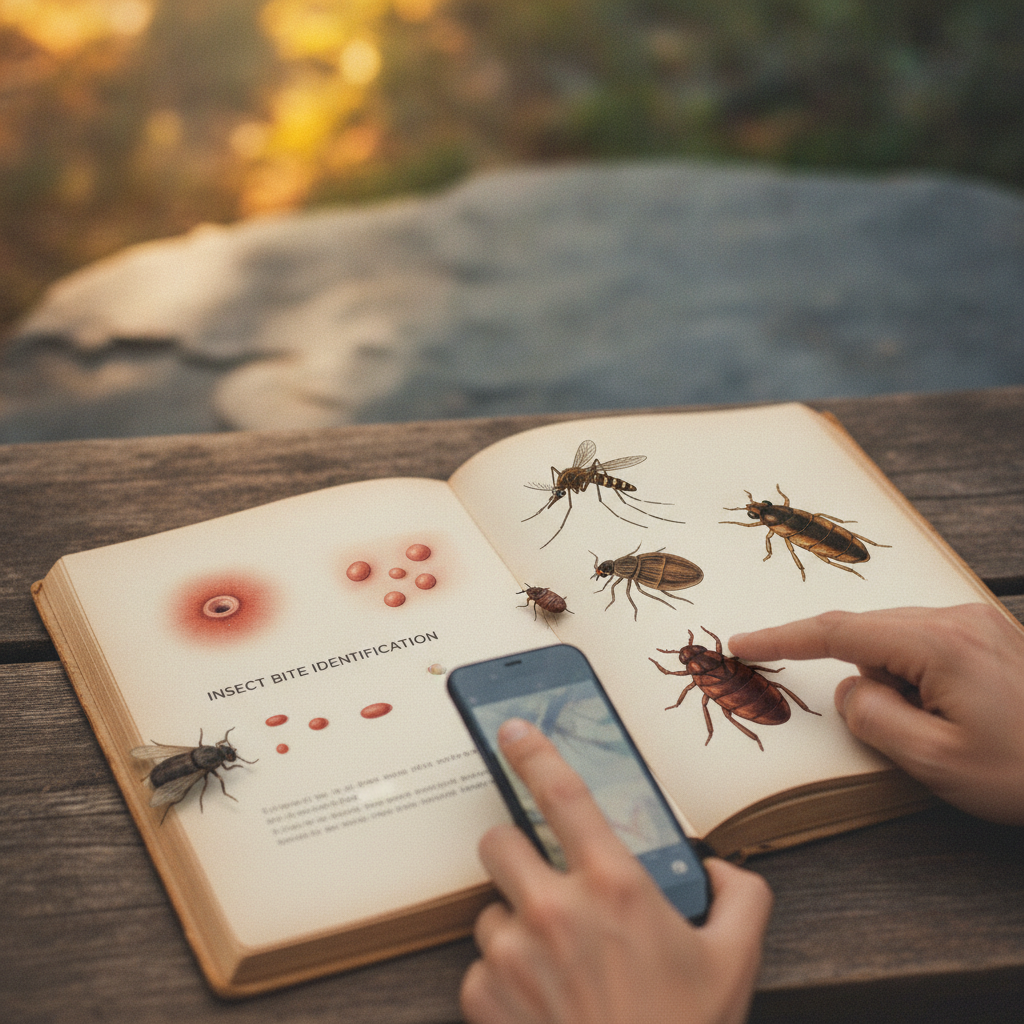
The Challenge of Identifying Insect Bites Visually
Homeowners call me weekly with the same question: can you identify this insect bite from a picture I took? The honest answer is sometimes yes, often partially, and occasionally not without more information. Insect bites share a frustrating visual similarity because the skin's inflammatory response follows the same basic biology regardless of which species injected saliva. Histamine release, localized swelling, and redness create a narrow range of appearances that fool even experienced eyes.
Yet picture-based identification remains valuable as a first step. When you identify an insect bite by picture systematically — examining pattern, location, timing, and progression — you eliminate large categories of possibilities quickly. A linear cluster of bites on your shoulder after sleeping in a hotel room tells a different story than scattered ankle welts after walking through a meadow. The picture captures evidence your memory might distort, and sharing it with pest professionals, physicians, or identification apps creates a record that improves over time.
This guide presents the field-tested workflow I use with clients: photograph correctly, analyze visual features in order, cross-reference common species, and know when the picture alone is insufficient. The goal is not perfect species-level diagnosis from a skin photo — that often requires capturing the insect itself — but confident narrowing that drives smart next steps for treatment and prevention.
Step One: Capture a Usable Bite Photo
Identification starts before you open any reference guide. A blurry, flash-washed, or heavily filtered photo wastes everyone's time. Hold your phone steady, tap to focus on the most representative bite, and shoot in natural daylight near a window. Avoid direct flash, which blows out red tones and creates misleading white hotspots on inflamed skin.
Take three photos minimum. First, a context shot showing all affected areas — both ankles, the full forearm, or whatever region is involved. Second, a medium shot showing how bites group together. Third, a close-up of a single bite with a coin or ruler for scale. This trio lets you analyze pattern, count, and individual morphology without guessing from a single crop.
Note the exact time you photographed and when bites first appeared. Bed bug reactions may lag one to three days behind feeding. Mosquito welts develop within minutes. Chigger itch peaks at forty-eight hours after exposure ended. Timestamp metadata embedded in phone photos helps, but a written note like "noticed at 7 AM, appeared overnight" adds context photos alone cannot carry.
Step Two: Analyze Pattern and Distribution
Open your photos and answer four questions before researching species. How many bites are present? One solitary lesion suggests a spider, tick, horsefly, or single aggressive ant. Dozens of scattered marks suggest mosquitoes, gnats, or no-see-ums. Tight clusters of three to five suggest fleas or chiggers. Lines or zigzags of three to five bites strongly suggest bed bugs.
Where on the body did bites appear? Fleas and chiggers concentrate on lower legs, ankles, and waistbands where clothing creates entry points. Mosquitoes target exposed skin — arms, neck, face. Bed bugs bite sleep-exposed areas — shoulders, arms, neck, face — avoiding skin covered by pajamas. Tick bites occur anywhere clothing gaps expose skin during outdoor activity.
Are bites symmetric between body sides or clustered on one area? Symmetric ankle involvement after visiting a home with pets suggests fleas. One-sided shoulder clusters after hotel travel suggests bed bugs. Widespread scattered bites after an outdoor barbecue points toward flying insects. Pattern analysis from your picture eliminates more species than examining a single welt's redness level.
Step Three: Match Visual Features to Species Profiles
With pattern and location documented, compare individual bite morphology against species profiles. Mosquito bites present as round, pale-centered, pink-to-red welts ranging from five to fifteen millimeters. They itch immediately and swell over thirty minutes. Flea bites stay smaller — often two to four millimeters — with sharper red halos, less swelling, and more persistent itch that lasts days.
Bed bug bites vary enormously between individuals but follow consistent distribution rules. Some people show no visible reaction; others develop large welts. The picture clue is arrangement — rows, clusters, or zigzags on sleep-exposed skin — not necessarily size. Look for bites appearing in sets of three to five aligned marks, the classic feeding pattern as the bug walks and samples multiple sites.
Chigger bites appear as small red papules, intensely itchy, grouped at sock lines, belt areas, and bra straps. They resemble flea bites in size but lack the pet-associated context. Chigger photos often show twenty or more bumps in a concentrated zone rather than flea's smaller scattered groups.
Spider bites are over-diagnosed from pictures. True spider bites typically produce one lesion with optional central puncture mark, sometimes painful rather than itchy. Suspect spider bites only when the picture shows a solitary mark at a site where spiders hide — stored boots, basement corners, firewood stacks — not when multiple bumps appear after outdoor activity.
Fire ant bites evolve distinctively in sequential photos. Initial sting creates immediate burning pain followed within hours by white pustules atop red bases. This pustule stage photographed twelve to twenty-four hours after yard work in the southern United States strongly indicates fire ant envenomation rather than any biting fly or flea.
Step Four: Add Context Beyond the Picture
A picture without context misleads. Record answers to these questions alongside your photos: What were you doing in the twenty-four hours before bites appeared? Were others in your group also bitten? Do you have pets? Did you stay in new lodging? Were you in tall grass, near standing water, or around outdoor food?
Context transforms ambiguous pictures into probable identifications. Scattered ankle bites after visiting a friend with an untreated cat strongly suggest fleas regardless of whether the photo alone looks generic. Linear shoulder bites after a hotel stay suggest bed bugs even if individual welts resemble mosquito bumps. Multiple family members with identical ankle patterns after a campsite evening suggest chiggers or fleas from infested picnic areas.
Season and geography matter. No-see-um bites plague coastal and lakeside areas in warm months, producing smaller, more numerous welts than typical mosquitoes. Deer fly bites create painful, bleeding wounds on scalp and shoulders during woodland hikes in mid-summer. Tick bites peak during spring and fall activity periods in endemic regions. Your picture plus location data narrows regional species lists dramatically.
Step Five: Use Tools and Know Their Limits
AI identification tools analyze bite photos by comparing visual features against training databases. Results improve when you upload clear, well-lit images with descriptive context. Insect Identifier and similar apps excel at identifying the insect itself — photograph the bug on your windowsill, in your tent, or on your pet's fur for far more reliable results than analyzing skin lesions alone.
When using picture-based bite identification apps, treat top suggestions as hypotheses ranked by probability, not definitive diagnoses. Upload your three-photo set if the app accepts multiple images. Include notes about timing and location in any text fields provided. Compare app suggestions against the pattern analysis you performed manually — agreement between your workflow and AI output increases confidence.
Medical identification exceeds what any app provides. Seek professional care for bites with spreading redness, warmth, red streaks, fever, pus, severe pain, muscle cramping, or systemic allergic symptoms. Use picture identification to inform prevention and reduce anxiety about routine bites, not to avoid necessary medical evaluation.
Prevention Based on Picture ID Results
Once you identify the likely species from your picture analysis, prevention becomes targeted rather than generic. Mosquito identification leads to repellent application, protective clothing at dusk, and eliminating standing water near your home. Flea identification triggers pet treatment, vacuuming carpets and upholstery, and washing bedding at high heat.
Bed bug picture identification should prompt inspection of mattress seams, box springs, headboards, and luggage. Look for live insects, shed skins, and dark fecal spots. Professional treatment is often necessary once confirmed. Chigger identification means treating clothing with permethrin before hiking and showering immediately after exposure to remove unattached larvae.
Document your identifications with saved photos and notes. Recurring bite pictures in the same location month after month indicate established pest populations requiring structural intervention rather than topical cream alone. Building this visual library transforms reactive scratching into proactive household and outdoor management.
Frequently Asked Questions
Can you accurately identify an insect bite by picture alone?
Often you can narrow to a short list of likely species using pattern, location, and timing. Definitive identification works best when you also photograph the insect itself.
What is the most reliable visual clue in bite photos?
Distribution pattern and body location outweigh individual welt size or redness. Linear clusters on shoulders after sleeping suggest bed bugs; ankle clusters after pet contact suggest fleas.
How soon after a bite should I take the picture?
Photograph immediately, then again at six, twenty-four, and forty-eight hours if still uncertain. Some species show distinctive progression that single snapshots miss.
Why do online bite photos often contradict each other?
Individual immune responses vary, and many labeled "spider bite" photos actually show infections or other conditions. Trust verified medical and extension sources over random image searches.
What app helps identify insects from photos?
Insect Identifier uses AI to identify insects and spiders directly from photos, helping you connect the species to its bite pattern. Download it free on the App Store.
Download Insect Identifier Today
Whether you are working through a bite photo step by step or ready to identify the insect itself, Insect Identifier puts expert-level arthropod identification in your pocket. Simply snap a photo of any insect, spider, butterfly, or bug and receive detailed species information within seconds.
The app covers thousands of species with habitat notes, behavior details, safety information, and identification history you can export as PDF. Save every discovery and build your personal field journal.
Download Insect Identifier on the App Store and start identifying the insects around you today.