Understanding Insect Bite Identifiers
After twenty years in pest management, I have tested virtually every insect bite identifier available to consumers — mobile apps, web-based photo analyzers, laminated field cards, and the old-fashioned method of capturing the bug in a jar. Each approach solves part of the puzzle, and each fails predictably when used beyond its design limits. The identifier that works best is the one matched to your evidence: skin photos alone, insect specimens, environmental clues, or ideally all three together.
An insect bite identifier connects the mark on your skin to a probable arthropod species. The connection is probabilistic, not deterministic, because bite appearance varies with individual immune response, bite age, skin location, and whether multiple species fed simultaneously. Professional pest inspectors rarely diagnose from bite photos alone — we look for the insect, its harborage, and its signs. Consumer identifiers that promise certainty from a single welt photo oversell what dermatology and entomology science supports.
This guide evaluates every major identifier category, teaches you to extract maximum accuracy from each, and explains when to stop guessing and call a physician or pest professional. My goal is practical: help you identify insect bites well enough to choose the right response without unnecessary alarm or dangerous delay.
Manual Identifiers: Keys, Charts, and Atlases
Before apps existed, insect bite identifiers were paper tools — and they remain valuable. Dichotomous keys ask branching questions: single bite or multiple? Itchy or painful? Appeared overnight or after outdoor activity? Each answer eliminates species groups until a short list remains. State extension services publish free online keys for regional biting arthropods that outperform generic image searches because they force systematic thinking.
Visual atlas identifiers organize bite photos by pattern type. You find the group matching your photo — scattered, clustered, linear, or solitary — then compare individual lesion details within that group. Laminated pocket cards sold at outdoor retailers and nature centers condense this into trail-friendly format weighing less than an ounce. I keep one in my inspection kit for client education even though I carry a phone loaded with apps.
Manual identifiers train your eye in ways apps do not. After using a key twenty times, you internalize pattern recognition and stop needing the tool for common scenarios. The limitation is speed and the requirement for honest self-assessment — people often answer key questions based on what they fear rather than what they observed, skewing results toward dramatic but unlikely species like brown recluse spiders.
AI-Powered Insect Bite Identifiers
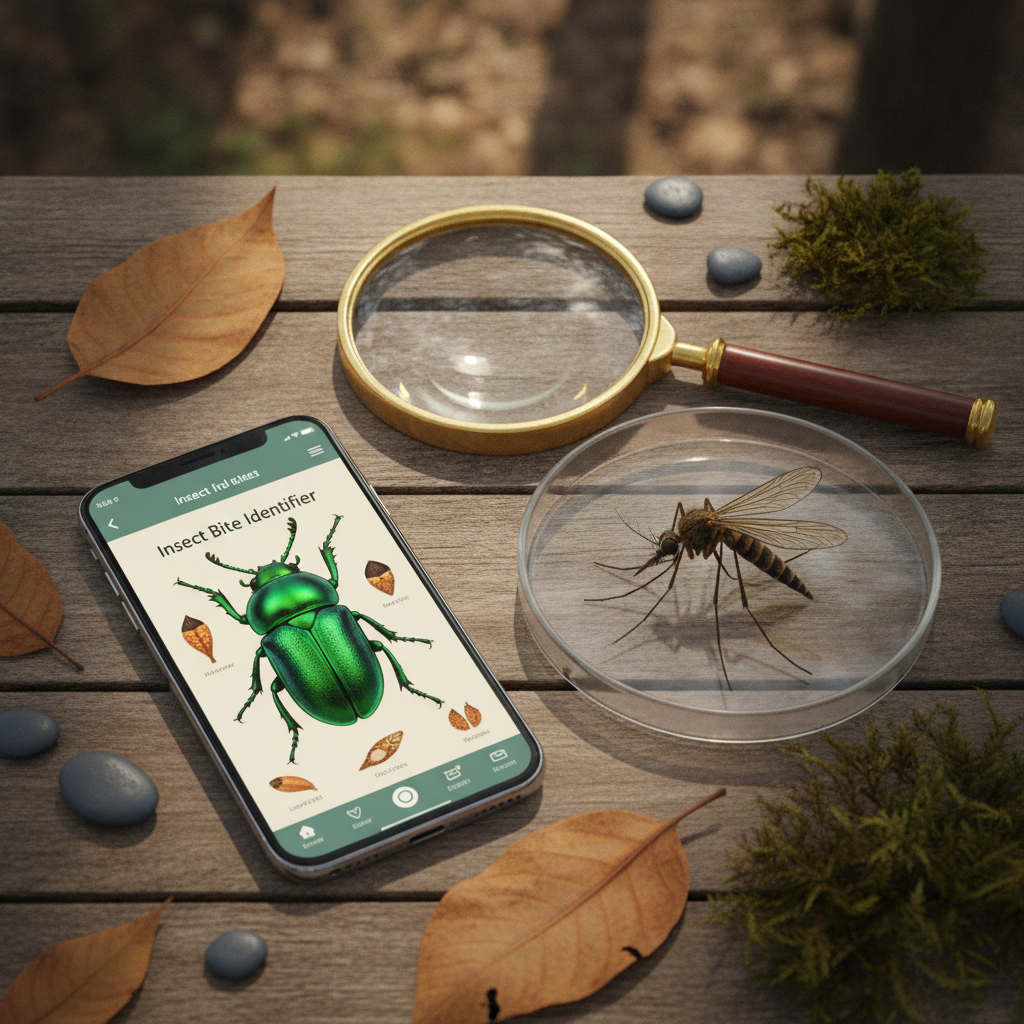
Mobile apps representing the fastest-growing identifier category use machine learning models trained on image databases. Upload a bite photo, add optional context tags, and receive ranked species suggestions within seconds. Accuracy depends heavily on training data quality, photo clarity, and whether the model was trained on bite images or arthropod specimen images — a crucial distinction most marketing copy obscures.
Models trained primarily on insect morphology — photographing the bug itself — dramatically outperform models analyzing skin inflammation patterns. When evaluating any insect bite identifier app, check whether it prioritizes specimen photos. Insect Identifier focuses on identifying the arthropod directly, which my field experience confirms produces more reliable connections to bite patterns than analyzing welts alone.
Optimize AI identifier input by uploading your best evidence. Use natural daylight, include scale reference, provide overview and close-up images, and complete all context fields honestly. A photo of ankle clusters tagged with "appeared after visiting friend with untreated cat, June, Midwest" produces better AI ranking than the same photo with no context.
Treat AI confidence scores as conversation starters, not verdicts. Sixty percent mosquito and thirty percent flea means investigate both — check pets for fleas, review recent outdoor exposure for mosquitoes — rather than accepting the higher number and stopping. Cross-reference AI output with extension service fact sheets before taking expensive action like whole-house fumigation based on app output alone.
Specimen-Based Identification: The Professional Standard
Every pest management certification program teaches the same hierarchy: identify the pest, not the damage. Insect bite identifiers work identically. Photograph or collect the insect found at or near the bite site and identify that specimen using whatever tool you have — app, extension service submission, or professional inspection.
Bed bug identification exemplifies why specimens matter. Two roommates sleeping in the same infested bed develop completely different bite reactions — one covered in welts, one unmarked. An insect bite identifier analyzing skin photos alone misleads half the household. Finding a bed bug in the mattress seam identifies the problem for everyone regardless of individual skin response.
Flea identification follows the same logic. Ankle bite photos look generic. Comb your cat over white paper, photograph the jumping insect, run it through Insect Identifier, and the bite mystery resolves with near certainty. I have resolved hundreds of client cases this way after they spent weeks treating "spider bites" that were flea reactions from untreated pets.
Tick identification from attached specimens determines disease exposure risk. Ixodes scapularis in the northeastern United States carries Lyme disease; Amblyomma americanum in the southeast carries ehrlichiosis. Photographing the attached tick before removal and identifying species guides medical follow-up beyond what any bite mark analysis provides.
Environmental Identifiers: Reading the Scene
Skilled pest professionals use environmental insect bite identifiers — clues at the bite location that suggest species without seeing either the bite close-up or the insect. Mattress seam fecal spotting identifies bed bugs. Pet scratching plus carpet flea dirt identifies fleas. Standing water and dusk activity identify mosquitoes. Fire ant mounds near the bite location identify Solenopsis envenomation.
Learn to read harborage signs alongside bite analysis. Pull back sheets and inspect mattress piping with a flashlight. Check pet bedding and carpet edges with a white sock test — walk in white socks across suspect carpet and inspect for dark flea dirt specks. Examine window screens for gaps explaining indoor mosquito bites. Environmental evidence either confirms or contradicts what bite pattern analysis suggests.
Seasonal environmental identifiers add temporal context. Chigger season peaks in late spring through early fall when larval trombiculid mites populate tall grass and brush edges. Mosquito pressure rises after rain events fill breeding containers. Wasp aggression increases in late summer when colonies peak and food sources shift toward human beverages and fallen fruit.
Comparing Popular Identifier Approaches
Different situations call for different identifier combinations. For a one-time welt after a backyard barbecue, a manual key plus AI app provides sufficient analysis — likely mosquitoes or biting flies, prevention focused on repellent and timing outdoor activities away from dusk peaks.
For recurring overnight bites in your bedroom, environmental inspection plus specimen identification replaces bite photo analysis entirely. Install bed bug interceptors under bed legs, inspect seams daily for two weeks, and photograph any captured insects. Bite identifiers play secondary role until specimens confirm species.
For pet-associated household itching, pet examination is the primary identifier. Veterinary flea treatment combined with environmental vacuuming and washing resolves most cases without ever photographing human bite marks. Human bite photos become documentation for medical visits if reactions are severe, not the primary diagnostic tool.
For travel-related bite concerns with systemic symptoms — fever, joint pain, persistent headache — medical identifiers in clinical laboratories supersede all consumer tools. Inform physicians of travel history, bite timing, and any insect photos you captured. Consumer apps serve pre-visit documentation, not diagnosis.
Common Identifier Mistakes to Avoid
The most costly mistake I see is treating app output as confirmed species identity and buying wrong treatment products. Flea bombs for misidentified bed bugs. General insect spray for chiggers requiring clothing treatment. Spider extermination for bacterial infections needing antibiotics. Always verify AI and manual identifier output against environmental and specimen evidence before spending money on treatment.
Second mistake: photographing bites too late or too early. Fresh bites lack developed patterns; month-old bites show secondary infection obscuring original morphology. Optimal identifier input captures bites at twelve to forty-eight hours with progression series if initial analysis is inconclusive.
Third mistake: ignoring geographic plausibility. Brown recluse identifiers flagging every solitary welt mislead patients in states where recluses do not occur. Check regional species distribution before accepting dramatic identifications that confirm your fears rather than your evidence.
Fourth mistake: using bite identifiers for medical emergencies. Difficulty breathing, throat swelling, and systemic allergic reactions require emergency services, not app uploads. Identifiers serve non-emergency education and prevention, never acute care triage.
Building Your Identifier Toolkit
Assemble a practical identifier toolkit for your household. Install one specimen-focused app like Insect Identifier on every family phone. Bookmark your state extension service biting arthropod page. Keep a small container for capturing insects found near bite sites. Photograph bites with consistent technique and save images with date and activity notes.
Review identifier results as a household when bites affect multiple members. Different skin reactions to the same infestation confuse individual analysis — one person's clear flea identification from ankle photos plus another's unmarked skin plus pet scratching equals consensus without over-relying on any single bite photo.
Update your toolkit seasonally. Add tick identification resources before spring hiking season. Review fire ant mound recognition before southern summer yard work. Refresh app versions before vacation travel to ensure current regional species databases.
Frequently Asked Questions
What is the best insect bite identifier app?
Apps that identify the insect specimen from photos outperform those analyzing skin lesions alone. Insect Identifier focuses on arthropod morphology for higher accuracy.
Can an insect bite identifier diagnose infections?
No. Identifiers suggest probable arthropod species. Spreading redness, pus, and fever require medical evaluation for possible bacterial infection regardless of bite identification results.
How do I verify an app's insect bite identification?
Confirm with specimen photos, environmental evidence, and extension service resources. Agreement across multiple evidence types increases confidence appropriately.
Are web-based insect bite identifier tools safe to use?
Tools from university extension services and established medical institutions are trustworthy. Avoid unverified websites requesting personal health data or selling unproven treatments based on photo upload results.
What app identifies insects from photos?
Insect Identifier uses AI to identify insects and spiders from photos, providing species information that connects to typical bite presentations. Download it free on the App Store.
Download Insect Identifier Today
The most reliable insect bite identifier starts with the insect itself. Insect Identifier puts expert-level arthropod recognition in your pocket — snap a photo of any bug and receive detailed species information within seconds.
The app covers thousands of species with habitat notes, behavior details, safety information, and identification history you can export as PDF. Save every discovery and build your personal field journal.
Download Insect Identifier on the App Store and start identifying the insects around you today.