
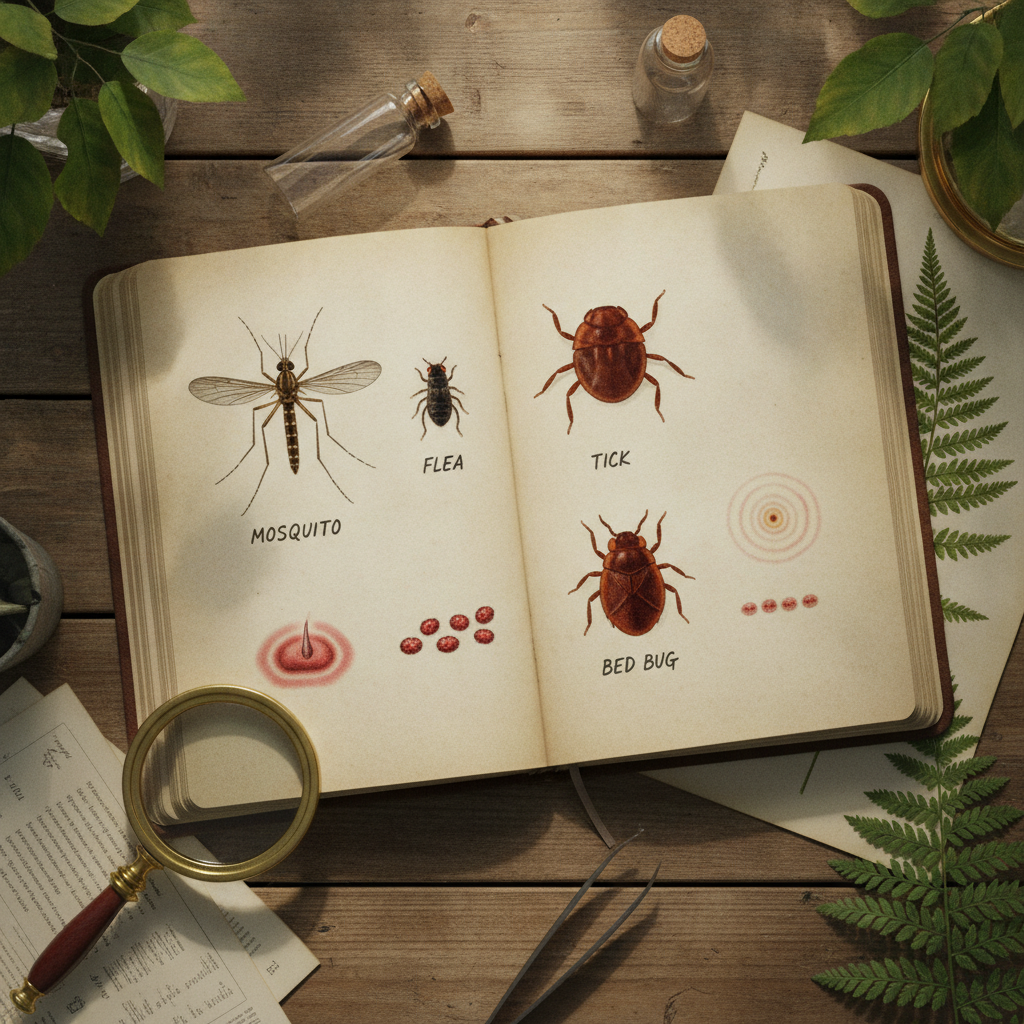
What Homeowners Get Wrong About Insect Bites Different Types
In two decades of pest management consultations, the same pattern appears in nearly every household call about insect bites different types. Someone has red marks on their skin, they searched online, and they arrived at a diagnosis that does not match the evidence in their home. Usually they blame spiders. Sometimes they buy generic bug bombs that do not touch the actual source. Rarely do they connect bite pattern to the pest population living in their carpet, mattress seams, or yard soil mounds.
This guide approaches insect bites different types the way I train technicians before their first residential inspection — evidence first, species second, treatment third. Your skin tells part of the story. Your environment tells the rest. A correct identification saves money on misdirected sprays, prevents weeks of unnecessary anxiety, and routes you toward the intervention that actually stops the biting. An incorrect identification wastes all three.
I focus on the insect bites different types that generate the most service calls in American homes: fleas, mosquitoes, bed bugs, ants, and assorted flying biters. Spiders appear in homeowner fears far more often than in confirmed bite cases with credible evidence. Ticks matter for outdoor properties bordering woodland. Each section below pairs skin findings with the inspection steps I perform when a client reports that specific bite profile.
Flea Bites vs. Other Insect Bites Different Types Indoors
Flea bites are the insect bites different types I investigate most often in homes with pets — and increasingly in homes where visitors' untreated animals introduced a temporary population. The bite profile is distinctive when you know the hallmarks: small red dots, often two to three millimeters, clustered on ankles and lower calves, with itch that persists days longer than typical mosquito welts.
During inspection, I kneel and check carpet along baseboards, pet resting areas, and upholstered furniture with a white sock test — walking slowly through suspect rooms and examining whether dark jumping specks appear on the fabric. Flea dirt — digested blood feces — on pet bedding confirms active feeding even when live fleas are scarce. Comparing flea bites to other insect bites different types: mosquitoes do not produce persistent ankle clusters in winter-heated living rooms without recent outdoor exposure. Bed bugs do not jump from carpet and rarely concentrate on ankles alone.
Treatment for confirmed flea insect bites different types requires coordinated pet veterinary care and environmental management. Wash pet bedding at minimum sixty degrees Celsius. Vacuum daily including furniture crevices and immediately dispose of vacuum bags or empty canisters outside. Insect growth regulators combined with adulticides break the life cycle when over-the-counter sprays fail. Homeowners who treat only their own skin while ignoring flea populations in carpet guarantee recurring bite episodes monthly.
Mosquito and Flying Insect Bites Different Types Around the Property
Mosquito bites represent the most common outdoor insect bites different types on properties with standing water, dense vegetation, or proximity to wetlands. Lesions are scattered on exposed skin after dusk activity — arms, neck, ankles if barefoot. Multiple family members show similar patterns after shared outdoor time. The inspection focus shifts outdoors: birdbaths, clogged gutters, saucers under plant pots, unused tires, and low spots holding rainwater after storms.
Biting midges and no-see-ums produce insect bites different types that homeowners in mosquito-prone regions sometimes misattribute to their regular mosquito population. Midge welts are smaller, more numerous, and tightly concentrated after calm humid evenings near water features or decorative ponds. Standard mosquito misting systems may not control midges effectively. Fine screening, fan circulation on patios, and scheduling outdoor activities away from dawn and dusk peaks reduce exposure more reliably than reactive bite creams.
Horse flies and deer flies generate painful solitary welts during daytime yard work near livestock, lakes, or unmowed field edges. These insect bites different types feel sharp immediately — homeowners describe a burning snap rather than gradual itch discovery. Property management includes mowing border vegetation, managing livestock manure, and personal protection with permethrin-treated clothing during high season. Flying insect bites different types always correlate with habitat features inspectable on a property walk — a step most panicked homeowners skip when they fixate on skin photos alone.
Bed Bug Bites Among Insect Bites Different Types in Bedrooms
Bed bug bites are the insect bites different types that generate the highest homeowner distress relative to actual medical danger. They do not transmit disease to humans under current evidence. They do create psychologically exhausting infestations that spread room to room when treatment delays allow population growth. Recognition and early professional intervention matter enormously.
The bite profile includes linear or clustered groups of three to five lesions on sleep-exposed skin — shoulders, arms, neck, and face. Reactions may delay one to three days after sleeping in affected beds, which confuses timeline reconstruction. One partner may react severely while another shows nothing, which confuses relationship-blame dynamics unproductively. Inspection targets mattress seams, box spring corners, headboard crevices, and nightstand joints for live insects, shed skins, and dark fecal spotting.
Comparing bed bug insect bites different types to flea bites: bed bugs do not jump, do not require pets, and correlate with travel, used furniture acquisition, or multi-unit building adjacency. Flea bites concentrate on ankles from floor-level activity; bed bug bites appear wherever skin contacted the mattress during sleep. Comparing bed bugs to mosquito bites: bed bugs produce delayed clustered lines after indoor sleep, not immediate scattered welts after patio dinners.
DIY treatment for established bed bug infestations fails more often than it succeeds in my professional experience. Encasements, targeted heat treatment, and licensed pesticide application with follow-up inspections outperform store-bought foggers that scatter populations without eliminating harborages. If your insect bites different types profile matches bed bugs and inspection confirms evidence, budget for professional service early rather than after six months of failed home remedies.
Ant Stings and Bites: Regional Insect Bites Different Types
Ant-related insect bites different types vary dramatically by species and geography — a reality that generic online guides often flatten unhelpfully. In southern states, imported fire ant mounds produce the most diagnostically distinctive ant sting profile I encounter: immediate burning pain, multiple stings after mound disturbance, and white pustules on red bases within twelve to twenty-four hours. Yard inspections identify characteristic soil mounds in sunny open areas. Broadcast bait applications and individual mound treatments reduce populations when homeowners follow label directions consistently.
Non-fire ant species produce different insect bites different types. Field ants and harvester ants bite and spray formic acid, creating painful welts without the pustule stage fire ants produce. Carpenter ants rarely bite humans but can when handled during wood-damaged structure inspections — a finding that redirects concern from biting to moisture-damaged timber requiring construction repair. Odorous house ants and pavement ants are nuisance invaders that do not typically generate the bite calls fire ants do.
Property management for ant insect bites different types means identifying species before treatment. Fire ant baits differ from sweet ant baits in formulation and timing. Spraying pavement ant trails with repellent sprays can fragment colonies into multiple indoor invasion points — a common homeowner mistake I correct during consultations. Photograph ants at the sting site or trailing along baseboards and identify them before purchasing products labeled for the wrong species.
When Insect Bites Different Types Require Professional Help
Not every insect bite type requires a pest management professional. Mosquito bites after confirmed outdoor exposure resolve with repellent and time. A single bee sting without allergic symptoms needs first aid, not an exterminator. The decision point arrives when environmental evidence confirms an infestation that DIY methods cannot reach — bed bugs in wall voids, fleas in deep carpet with incomplete pet treatment, fire ant mounds across large yards, or recurring biting fly problems tied to structural moisture issues breeding midges.
I advise professional inspection when insect bites different types recur in the same body location pattern monthly despite home treatment attempts. Recurring ankle clusters with an untreated pet virtually always mean incomplete flea control. Recurring sleep-exposed linear bites after travel mean bed bug introduction risk requiring mattress and luggage protocol review. Recurring yard pustule stings in southern properties mean fire ant population management beyond what one can of retail spray addresses.
Medical professionals complement pest professionals for insect bites different types with systemic symptoms. Allergic reactions to stings, cellulitis from infected scratches, tick bullseye rashes, and fever after tropical travel all require clinical evaluation independent of whether I successfully identify the property pest source. The safest homeowners maintain both contacts — a licensed pest inspector for environment and a physician for body.
Prevention Matched to Insect Bites Different Types
Accurate identification of insect bites different types routes prevention efficiently. After confirming fleas, implement year-round pet prevention rather than episodic treatment when scratching starts. After confirming mosquitoes, empty standing water weekly and apply EPA-registered repellent before yard work at dusk. After confirming bed bugs, institute luggage inspection protocols after travel and hesitate before accepting used mattresses or upholstered furniture from unknown sources.
Document your household's confirmed insect bites different types in a simple log with dates and photographs. Patterns emerge across seasons that generic worry obscures. A family that catalogs three June camping trips with identical mosquito scatter patterns stops fearing spiders by August. A family that logs flea episodes after each visit from a specific relative institutes guest pet treatment policies proactively.
Integrated pest management — the evidence-based approach licensed professionals follow — combines identification, habitat modification, mechanical control, and targeted chemical intervention when necessary. It rejects indiscriminate spraying that kills beneficial insects while missing the actual biting species. Your insect bites different types history is the first data point in that rational process.
Frequently Asked Questions
What are the most common insect bites different types in homes?
Flea bites in pet households, mosquito bites after outdoor activity, and bed bug bites after travel top residential complaints. Fire ant stings dominate yard concerns in southern states.
How do I inspect my home when insect bites different types are suspected?
Match bite pattern to room and activity first. Check pet bedding and carpet for fleas, mattress seams for bed bugs, standing water outdoors for mosquitoes, and yard mounds for fire ants.
Can insect bites different types persist after the insects are gone?
Chigger itch peaks at forty-eight hours after mites have detached. Mosquito welts fade over days. Bed bug reactions may appear days after feeding. Timeline knowledge prevents false conclusions about active infestation.
When should I call a pest professional for insect bites different types?
Call when inspection confirms infestation, when DIY treatment fails after two coordinated attempts, or when biting recurs in identical patterns monthly despite home interventions.
What app helps identify insects causing different bite types?
Insect Identifier uses AI to identify insects and spiders from photos, connecting species identity to expected bite patterns. Download it free on the App Store.
Download Insect Identifier Today
Managing insect bites different types starts with knowing what insects share your property. Insect Identifier puts expert-level species recognition in your pocket — snap a photo of any bug and receive detailed information within seconds.
The app covers thousands of species with habitat notes, behavior details, safety information, and identification history you can export as PDF. Save every discovery and build your personal field journal.
Download Insect Identifier on the App Store and start identifying the insects around you today.